
As industrial processes become increasingly automated and efficient, the demand for reliable flow control equipment continues to grow. Among the many valve types used in modern industries, the electric knife gate valve has emerged as a highly effective solution for handling difficult media such as slurries, wastewater, pulp stock, mining tailings, powders, and fibrous materials.
Traditional gate valves often struggle when operating in applications involving suspended solids, viscous fluids, or abrasive materials. These challenging conditions can lead to clogging, leakage, excessive wear, and costly maintenance. Electric knife gate valves are specifically engineered to overcome these issues by combining the cutting capability of a knife gate design with the precision and convenience of electric actuation.
Today, electric knife gate valves are widely used in wastewater treatment plants, mining operations, pulp and paper mills, chemical processing facilities, food production plants, and power generation systems. Their ability to provide dependable shutoff, remote operation, and automated control makes them a preferred choice for modern industrial facilities seeking improved operational efficiency and reduced labor requirements.
This article explores the working principles, features, advantages, applications, selection criteria, and future trends of electric knife gate valves in industrial flow control systems.
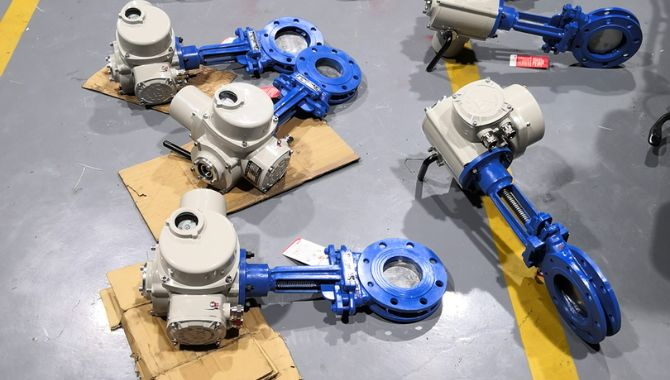
An electric knife gate valve is a specialized isolation valve equipped with an electric actuator that controls the movement of a sharp-edged gate. Unlike conventional gate valves, the gate features a knife-like profile capable of cutting through dense media containing solids, fibers, sludge, or suspended particles.
The electric actuator replaces manual handwheels or pneumatic operators, allowing the valve to be opened and closed automatically through electrical signals. This automation enables integration with modern control systems such as Programmable Logic Controllers (PLC), Distributed Control Systems (DCS), and Supervisory Control and Data Acquisition (SCADA) platforms.
Electric knife gate valves are primarily designed for on-off service rather than throttling applications. Their robust construction and cutting action allow them to maintain reliable performance even under demanding operating conditions.
Industrial automation has transformed manufacturing and processing industries worldwide. Facilities increasingly require remote monitoring and control capabilities to improve productivity, safety, and operational efficiency.
Electric knife gate valves contribute significantly to automation initiatives by providing:
- Remote operation capabilities
- Automated process control
- Reduced manual intervention
- Improved worker safety
- Enhanced process consistency
- Lower operating costs
- Real-time valve status feedback
By integrating electric actuators with digital control systems, operators can monitor and control valve performance from centralized control rooms, reducing the need for personnel to access hazardous or difficult-to-reach locations.
The operation of an electric knife gate valve is relatively straightforward but highly effective.
The valve consists of several essential components working together to achieve reliable isolation and flow control.
The knife gate is the core component of the valve. It consists of a flat metal blade with a sharpened leading edge.
When closing, the blade moves downward through the process media, cutting through solids, fibers, sludge, or debris that may otherwise obstruct valve operation. This cutting action minimizes clogging and ensures complete shutoff.
The electric actuator serves as the power source for valve operation.
It converts electrical energy into mechanical motion through an electric motor and gear mechanism. Depending on system requirements, the actuator may provide:
- Quarter-turn movement
- Multi-turn movement
- Position control
- On-off operation
- Modulating control
Modern actuators often include torque limiters, position indicators, overload protection, and communication interfaces.
The valve body houses the internal components and provides structural support.
Knife gate valve bodies are typically manufactured from:
- Cast iron
- Ductile iron
- Carbon steel
- Stainless steel
- Duplex stainless steel
- Specialty alloys
Material selection depends on process conditions, corrosion resistance requirements, and operating temperatures.
The sealing system prevents leakage and ensures reliable shutoff.
Depending on application requirements, seals may consist of:
- EPDM
- NBR
- PTFE
- Viton
- Metal-to-metal sealing systems
Advanced sealing technologies enhance valve performance and extend service life.
The control system governs actuator operation through electrical signals.
It may include:
- Local control stations
- Remote control panels
- PLC integration
- SCADA connectivity
- Position feedback systems
The control system enables precise valve operation and process automation.
When a control signal is received, the electric actuator activates and drives the knife gate.
During opening:
- The actuator motor starts.
- The gate moves upward.
- The flow passage gradually opens.
- Process media flows through the valve.
Once fully open, the valve offers minimal flow restriction.
During closing:
- The actuator receives a close signal.
- The gate travels downward.
- The sharpened edge cuts through solids and fibers.
- The valve reaches the fully closed position.
- The sealing system isolates the process flow.
This automated operation eliminates the need for manual intervention and improves process reliability.
One of the most important advantages of electric knife gate valves is their superior cutting capability.
The sharpened gate edge effectively penetrates and cuts through:
- Fibrous materials
- Sludge
- Pulp stock
- Suspended solids
- Industrial waste streams
This feature significantly reduces the risk of blockage and ensures reliable operation.
As the gate moves through the valve body, it continuously wipes and cleans the sealing surfaces.
This self-cleaning action helps remove accumulated debris and prevents buildup that could impair valve performance.
Benefits include:
- Reduced maintenance
- Improved reliability
- Extended service life
- Consistent sealing performance
Self-cleaning characteristics are particularly valuable in wastewater and slurry applications.
Reliable shutoff is critical in industrial process systems.
Electric knife gate valves provide excellent sealing capabilities by combining precision-machined seats with robust sealing materials.
Advanced designs offer:
- Bidirectional sealing
- Bubble-tight shutoff
- Reduced leakage rates
- Enhanced process safety
These characteristics help maintain system efficiency and environmental compliance.
Compared with many alternative valve designs, electric knife gate valves feature a relatively simple structure.
Advantages include:
- Easy installation
- Reduced maintenance complexity
- Lower spare parts inventory
- Cost-effective operation
Their compact design also allows installation in space-constrained facilities.
Electric actuation enables operators to control valves from centralized locations.
Remote operation improves:
- Worker safety
- Process efficiency
- Response times
- Operational flexibility
This feature is especially beneficial in hazardous environments.
Modern electric actuators provide accurate positioning and repeatability.
This enables:
- Consistent process control
- Improved automation
- Enhanced system performance
- Reduced operational errors
Position feedback systems further improve monitoring capabilities.
The popularity of electric knife gate valves continues to grow because they offer numerous operational advantages.
Automation minimizes manual operation and inspection requirements.
This results in:
- Lower labor costs
- Increased productivity
- Reduced human error
- Improved workforce allocation
Many industrial environments contain hazardous materials or difficult operating conditions.
Remote-controlled electric valves reduce worker exposure to:
- Toxic chemicals
- High temperatures
- Pressurized systems
- Confined spaces
Automated operation ensures consistent valve performance and repeatable process control.
This contributes to:
- Reduced downtime
- Better product quality
- Improved process stability
- Increased operational efficiency
Self-cleaning action and robust construction reduce wear and maintenance frequency.
Facilities benefit from:
- Extended service intervals
- Reduced repair costs
- Lower spare parts consumption
- Improved equipment availability
Wastewater treatment facilities represent one of the largest markets for electric knife gate valves.
Applications include:
- Sludge handling
- Effluent control
- Screening systems
- Digester processes
- Pump station isolation
The ability to handle solids-laden fluids makes these valves ideal for wastewater environments.
Mining operations frequently transport abrasive slurries containing solid particles.
Electric knife gate valves are widely used for:
- Tailings transport
- Mineral processing
- Slurry pipelines
- Dewatering systems
- Ore handling facilities
Their cutting action and wear resistance improve operational reliability.
Pulp stock contains fibers that can obstruct conventional valves.
Knife gate valves effectively manage:
- Pulp suspension
- Paper stock
- Recycled fiber processing
- Chemical recovery systems
Their self-cleaning characteristics are particularly beneficial in these applications.
Chemical plants require reliable isolation equipment capable of handling corrosive and abrasive media.
Electric knife gate valves are used in:
- Chemical transfer systems
- Process tanks
- Waste treatment units
- Reactor isolation applications
Material selection ensures compatibility with aggressive chemicals.
Power plants utilize electric knife gate valves in:
- Ash handling systems
- Water treatment facilities
- Flue gas desulfurization systems
- Slurry transport lines
Automation supports efficient plant operation.
Specialized sanitary knife gate valves are increasingly used for handling:
- Food waste streams
- By-products
- Process slurries
- Cleaning systems
Stainless steel construction ensures hygienic operation.
Proper valve selection is essential for maximizing performance and service life.
Operators must evaluate:
- Solid content
- Fiber concentration
- Abrasiveness
- Corrosiveness
- Viscosity
These factors influence valve design and material requirements.
The valve must withstand operating conditions without compromising performance.
Engineers should consider:
- Maximum working pressure
- Pressure fluctuations
- Temperature range
- Thermal cycling
Actuator selection depends on:
- Torque requirements
- Power supply availability
- Operating frequency
- Control system compatibility
Oversized or undersized actuators can reduce reliability.
External conditions also affect valve performance.
Factors include:
- Humidity
- Dust exposure
- Outdoor installation
- Corrosive atmospheres
Appropriate actuator protection ratings should be selected.
Proper installation significantly affects valve performance.
Best practices include:
- Correct alignment
- Adequate support structures
- Electrical protection
- Proper wiring
- Functional testing
Following manufacturer recommendations helps prevent operational issues.
Although electric knife gate valves require relatively low maintenance, routine inspections remain important.
Maintenance activities include:
- Seal inspection
- Actuator testing
- Lubrication
- Electrical connection verification
- Position feedback calibration
Preventive maintenance helps maximize service life and reliability.
The future of electric knife gate valves is closely linked to industrial digitalization and smart manufacturing.
Emerging trends include:
Smart Actuators
Advanced actuators increasingly feature:
- Integrated diagnostics
- Predictive maintenance capabilities
- Wireless communication
- Cloud connectivity
Industrial Internet of Things (IIoT)
IIoT integration allows real-time monitoring of:
- Valve position
- Operating cycles
- Torque levels
- Maintenance requirements
Energy Efficiency
Manufacturers continue developing more energy-efficient actuator technologies to reduce operating costs and support sustainability goals.
Advanced Materials
New materials and coatings improve:
- Corrosion resistance
- Abrasion resistance
- Service life
- Reliability
These innovations enhance valve performance in increasingly demanding applications.
Electric knife gate valves have become indispensable components in modern industrial process systems. By combining the robust cutting action of knife gate technology with the precision and convenience of electric automation, these valves provide reliable isolation for some of the most challenging media encountered in industry.
Their excellent cutting performance, powerful self-cleaning capability, superior sealing characteristics, and remote-control functionality make them ideal for wastewater treatment, mining, pulp and paper production, chemical processing, power generation, and many other applications.
As industries continue embracing automation, digitalization, and intelligent process control, electric knife gate valves will play an increasingly important role in improving efficiency, safety, and operational reliability. Advances in smart actuators, IIoT connectivity, and material technologies will further expand their capabilities, ensuring they remain a vital solution for demanding flow control applications well into the future.