
In modern industrial automation systems, valve actuators play a fundamental role in ensuring precise, safe, and efficient flow control. Whether in oil and gas pipelines, chemical processing plants, water treatment facilities, power generation stations, or HVAC systems, actuators are responsible for converting control signals into mechanical motion that opens, closes, or modulates valves.
Among the most widely used actuator technologies are electric valve actuators and pneumatic valve actuators. Each operates on a different energy principle—electricity versus compressed air—and each brings distinct advantages and limitations depending on application requirements.
As industrial processes become more automated and digitally integrated, selecting the right actuator is no longer a simple mechanical decision. It directly affects system efficiency, operational safety, maintenance cost, and long-term reliability. This guide provides a detailed comparison and practical selection framework to help engineers, procurement teams, and system designers make informed decisions.
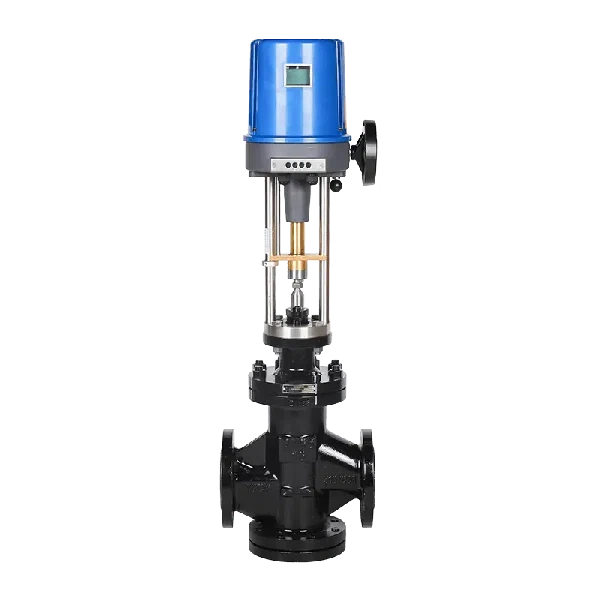
Valve actuators are mechanical devices designed to control valve movement without manual intervention. They receive signals from control systems such as PLCs (Programmable Logic Controllers) or DCS (Distributed Control Systems) and translate them into mechanical torque or linear force.
In industrial environments, actuators are essential for:
- Flow regulation of liquids, gases, and steam
- Pressure control in pipelines and vessels
- Emergency shutdown systems
- Automated process control loops
- Remote or hazardous environment operation
The performance of an actuator directly impacts process stability. A slow, inaccurate, or unreliable actuator can lead to production inefficiencies, safety risks, and increased operational costs.
Electric actuators convert electrical energy into mechanical torque through an electric motor, gearbox, and control module. The motor drives a gear system that positions the valve precisely according to input signals.
Modern electric actuators often include advanced electronic components such as position sensors, torque limiters, and smart controllers, enabling integration with digital automation systems.
Electric actuators are known for their exceptional control accuracy. They can position valves at exact intermediate openings, making them ideal for modulating flow rather than simple on/off operation. This precision is particularly valuable in chemical dosing, fuel regulation, and temperature-sensitive processes.
Once a valve reaches a set position, electric actuators typically consume little or no energy to maintain it. This makes them highly efficient in systems where valves remain static for long periods.
Electric actuators integrate seamlessly with modern control architectures. They support digital communication protocols and can be connected to SCADA systems for real-time monitoring, diagnostics, and remote control.
Many electric actuators feature built-in diagnostics that can detect overload conditions, motor overheating, or mechanical wear. This predictive capability helps reduce unexpected downtime.
Unlike pneumatic systems, electric actuators operate quietly and do not require compressed air systems, making them suitable for indoor environments or noise-sensitive installations.
Electric actuators typically require a higher upfront investment compared to pneumatic alternatives due to their complex electronics and motor systems.
Although modern electric actuators are faster than older designs, they still generally respond slower than pneumatic systems in high-speed applications.
Electric actuators rely entirely on a stable power source. In remote areas or unstable grid environments, this can be a disadvantage unless backup systems are available.
While industrial-grade electric actuators are designed for tough conditions, extreme heat, vibration, or corrosive atmospheres may require additional protection.
Pneumatic actuators operate using compressed air as the energy source. Air pressure is directed into a cylinder, where it moves a piston or diaphragm connected to the valve stem, producing mechanical motion.
They are widely used in industries where reliability, speed, and safety are critical.
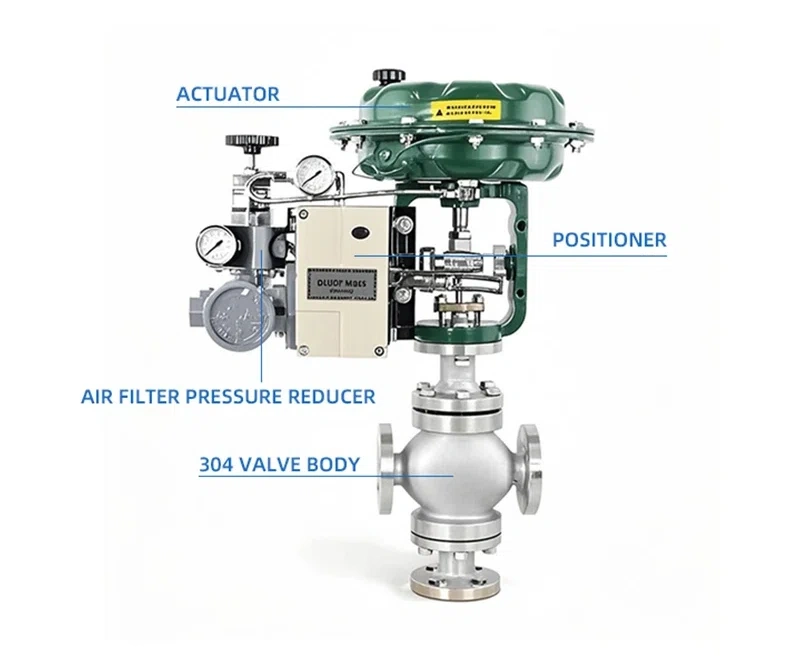
Pneumatic actuators are extremely fast compared to electric models. The use of compressed air allows near-instantaneous valve movement, making them ideal for emergency shut-off systems and high-cycle operations.
These actuators are mechanically simple and robust. They can operate reliably in harsh industrial environments, including high vibration, dust, humidity, and extreme temperatures.
One of the most important advantages is intrinsic safety. Since pneumatic actuators do not generate electrical sparks, they are widely used in explosive or flammable environments such as oil refineries and chemical plants.
Pneumatic actuators generally have lower initial purchase costs and simpler maintenance requirements, making them attractive for large-scale installations.
Pneumatic systems depend on a constant supply of compressed air. This requires compressors, air storage tanks, and distribution networks, which increase overall system complexity and energy consumption.
Compared to electric actuators, pneumatic systems offer less precise control, especially in intermediate valve positions. This can limit their use in highly sensitive process control applications.
Air exhaust and compressor operation generate noise, which may require soundproofing or isolation in certain environments.
Although actuators themselves are efficient, the process of generating compressed air can be energy-intensive, increasing long-term operational costs.
A direct comparison highlights how each technology fits different industrial needs.
- Electric actuators: High precision, suitable for modulation
- Pneumatic actuators: Moderate precision, best for on/off control
- Electric actuators: Moderate speed
- Pneumatic actuators: Very fast response
- Electric actuators: Require explosion-proof design
- Pneumatic actuators: Naturally safe due to no electrical spark
- Electric actuators: Easier wiring, no air system required
- Pneumatic actuators: Require air compressor and piping system
- Electric actuators: Electronic diagnostics reduce maintenance frequency
- Pneumatic actuators: Mechanical simplicity allows easy repair but requires air system upkeep
- Electric actuators: Lower energy consumption in static applications
- Pneumatic actuators: Higher indirect energy cost due to air compression
Choosing between electric and pneumatic actuators requires careful analysis of system requirements and operational priorities.
The first consideration is the nature of the application:
- If precise flow modulation is required, electric actuators are preferred
- If rapid on/off operation is needed, pneumatic actuators are more suitable
Industries such as chemical dosing, water treatment, and HVAC often favor electric systems, while oil, gas, and mining operations frequently rely on pneumatic solutions.
Operating conditions significantly influence actuator selection:
- Hazardous or explosive environments favor pneumatic actuators
- Clean, controlled environments allow greater use of electric actuators
- High humidity, dust, or vibration may require protective enclosures for electric systems
- Speed is critical in emergency and safety systems:
- Pneumatic actuators excel in fast shutoff applications
- Electric actuators are better suited for controlled, gradual adjustments
System infrastructure plays a major role:
- Pneumatic systems require compressors, dryers, and air networks
- Electric systems require stable voltage supply and backup power in critical applications
Facilities without existing compressed air systems often prefer electric solutions due to lower installation complexity.
Cost evaluation should include both initial and lifecycle costs:
- Pneumatic actuators: Lower upfront cost, but higher operational energy cost
- Electric actuators: Higher initial investment, but lower long-term energy consumption and maintenance savings
Long-term reliability and maintenance capacity should also be considered:
- Electric actuators offer advanced diagnostics and predictive maintenance features
- Pneumatic actuators are mechanically simpler but depend heavily on air system maintenance
The valve actuator industry is evolving rapidly due to automation, digitalization, and energy efficiency demands.
Modern electric actuators increasingly include IoT connectivity, enabling remote monitoring, predictive maintenance, and real-time performance analytics.
Industries are shifting toward energy-efficient systems. Electric actuators are gaining popularity due to their lower standby energy consumption.
Some modern systems combine pneumatic speed with electric control intelligence, creating hybrid actuators for specialized applications.
Stricter industrial safety regulations are driving improvements in both actuator types, especially in explosion-proof and fail-safe designs.
Pneumatic actuators dominate due to their safety, durability, and fast response in emergency shutdown systems.
Electric actuators are widely used for precise flow control in filtration and chemical dosing systems.
Both actuator types are used depending on function—electric for control systems and pneumatic for safety shutdowns.
Electric actuators are preferred for precise modulation, while pneumatic actuators are used in high-risk zones.
Electric actuators are commonly used due to quiet operation and fine control requirements.
The selection between electric and pneumatic valve actuators is not a matter of superiority but suitability. Each technology is designed to serve specific operational needs.
Electric actuators excel in precision, automation integration, and energy efficiency, making them ideal for modern smart industrial systems. Pneumatic actuators, on the other hand, offer unmatched speed, robustness, and intrinsic safety, making them indispensable in hazardous and high-speed applications.
A well-informed selection requires balancing performance requirements, environmental conditions, infrastructure availability, and lifecycle cost. In many advanced industrial systems today, both actuator types are used together to achieve optimal efficiency, safety, and control reliability.
As industries continue to evolve toward smarter and more automated operations, actuator technology will remain a critical component in achieving stable, efficient, and safe process control systems.
