
As modern industries continue moving toward intelligent automation and digital process control, the demand for highly accurate valve automation equipment has increased rapidly. One of the most important technologies supporting this transformation is the Modulating Electric Actuator. Designed to deliver precise proportional valve control, modulating electric actuators are widely used in industries such as oil and gas, power generation, water treatment, petrochemical processing, marine engineering, mining, pharmaceutical production, and HVAC systems.
Unlike conventional on-off actuators that simply open or close valves completely, modulating electric actuators can position valves at any intermediate point between fully open and fully closed. This capability allows industrial systems to regulate flow, pressure, temperature, and liquid levels with exceptional precision. By continuously responding to control signals, these actuators help maintain stable operating conditions, improve energy efficiency, reduce product waste, and enhance overall process reliability.
With the rapid development of Industry 4.0 and smart manufacturing technologies, modulating electric actuators are evolving from simple automation devices into intelligent control systems capable of remote monitoring, self-diagnostics, and digital communication. Their growing importance reflects the increasing need for efficient, accurate, and reliable industrial automation solutions.
This article explores the operating principles, components, control technologies, applications, benefits, challenges, and future development trends of modulating electric actuators.
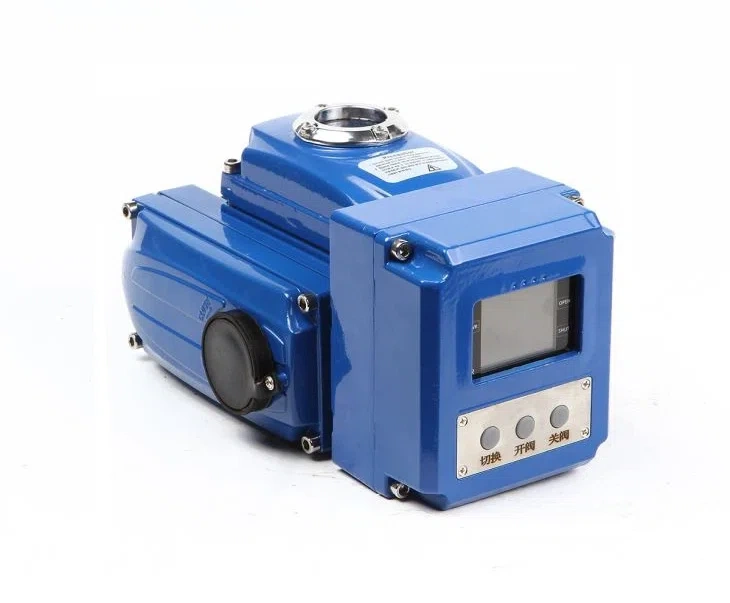
A modulating electric actuator is an electrically powered automation device designed to control valve movement proportionally according to an input control signal. The actuator converts the high-speed rotational movement of an electric motor into low-speed, high-torque output suitable for operating industrial valves.
These actuators are commonly installed on quarter-turn valves such as butterfly valves and ball valves, as well as multi-turn valves including gate valves and globe valves. By accurately positioning the valve stem or shaft, the actuator enables precise control of fluid flow and process conditions.
The key feature that distinguishes a modulating actuator from a standard electric actuator is proportional positioning. Instead of moving only between open and closed positions, the actuator continuously adjusts the valve opening according to process demands.
For example:
- 0% signal = fully closed valve
- 50% signal = half-open valve
- 100% signal = fully open valve
This proportional control allows industrial systems to operate more efficiently and maintain stable production conditions.
The operation of a modulating electric actuator relies on a closed-loop control system that continuously compares the desired valve position with the actual valve position.
The actuator receives an analog or digital control signal from a programmable controller, distributed control system (DCS), or supervisory control and data acquisition (SCADA) system.
Common input signals include:
- 4-20mA
- 0-10V DC
- 2-10V
- Digital bus communication protocols
The signal represents the required valve position.
For instance:
- 4mA = fully closed
- 12mA = 50% open
- 20mA = fully open
Inside the actuator, a servo controller or positioning board interprets the incoming signal and determines the target valve position. The controller constantly compares this target with the actual position feedback received from internal sensors.
If a difference exists, the controller activates the motor to move the valve accordingly.
The electric motor generates rotational movement, while the gear reduction system converts high-speed motor rotation into low-speed, high-torque output.
This torque is transferred to the valve stem or shaft, enabling accurate valve positioning under varying pressure conditions.
Position sensors continuously monitor the actual shaft position and transmit feedback to the control system.
Once the target position is reached, the controller stops the motor, ensuring accurate valve placement.
This entire process occurs continuously, enabling smooth and responsive process control.
Closed-loop control is the foundation of modulating actuator operation. In this system, the actuator constantly measures and corrects valve position based on real-time feedback.
The closed-loop system includes:
- Input signal
- Controller
- Electric motor
- Position sensor
- Feedback signal
This arrangement ensures that the valve remains precisely positioned even when process conditions change.
Closed-loop technology provides several important benefits:
- High positioning accuracy
- Stable process control
- Reduced overshoot
- Faster response time
- Lower process fluctuation
- Improved energy efficiency
In critical industrial operations, precise control can significantly improve safety and production quality.
Accurate position sensing is essential for reliable actuator performance. Modern modulating electric actuators use two main feedback technologies.
Traditional actuator systems often use potentiometers mechanically connected to the output shaft.
As the shaft rotates, the potentiometer changes electrical resistance, providing position information to the controller.
Advantages
- Simple design
- Cost-effective
- Proven technology
Limitations
- Mechanical wear
- Reduced long-term reliability
- Limited accuracy over time
Since mechanical contact occurs continuously, components may deteriorate after extended use.
Digital Hall Effect Position Sensing
Modern actuators increasingly employ digital magnetic sensing technologies using Hall effect sensors and encoders.
A permanent magnet attached to the output shaft interacts with non-contact Hall effect sensors to provide precise digital position information.
- No mechanical contact
- Higher accuracy
- Longer service life
- Better vibration resistance
- Improved reliability
- Reduced maintenance
Digital sensing technology has become the preferred solution for advanced industrial automation systems.
Electric Motor
The motor provides the rotational force needed to drive the valve.
Common motor types include:
- AC induction motors
- DC motors
- Brushless DC motors
- Servo motors
Motor selection depends on torque requirements, operating frequency, and control precision.
Gear Reduction Assembly
Industrial valves require significant torque to operate. The gear mechanism reduces motor speed while increasing torque output.
Common gear systems include:
- Worm gears
- Planetary gears
- Spur gears
These systems allow smooth and controlled valve movement.
Servo Controller
The controller functions as the actuator's central processing unit.
Its responsibilities include:
- Signal interpretation
- Position comparison
- Motor control
- Diagnostic monitoring
- Communication management
Modern intelligent controllers support advanced digital communication protocols.
Position Sensors
Position sensors continuously monitor shaft movement and provide real-time feedback for accurate positioning.
These sensors are essential for maintaining stable closed-loop operation.
Housing and Enclosure
Actuator enclosures protect internal components from environmental conditions such as:
- Dust
- Water
- Corrosion
- Vibration
- Hazardous atmospheres
Industrial actuators commonly feature:
- IP67 protection
- IP68 protection
- Explosion-proof designs
Quarter-turn actuators rotate the valve shaft by 90 degrees.
Typical valve applications include:
- Butterfly valves
- Ball valves
- Plug valves
These actuators are widely used in flow isolation and throttling systems.
Multi-turn actuators rotate the valve stem multiple turns for linear movement.
Applications include:
- Gate valves
- Globe valves
- Control valves
They are suitable for applications requiring precise flow regulation.
Linear actuators convert rotary motion into direct linear movement.
Common uses include:
- Damper control
- Slide gates
- Linear process valves
Modulating actuators provide highly accurate valve positioning, enabling stable and repeatable process control.
This improves:
- Product consistency
- Operational efficiency
- Process safety
Electric actuators consume power only during movement, unlike pneumatic systems that require continuous compressed air generation.
This leads to:
- Lower energy consumption
- Reduced operating costs
- Improved system efficiency
Electric actuators eliminate the need for hydraulic oil or compressed air systems.
Benefits include:
- No fluid leakage
- Cleaner operation
- Reduced environmental risk
Electric actuators contain fewer mechanical components compared with hydraulic systems.
Advantages include:
- Longer service intervals
- Lower maintenance costs
- Improved reliability
Modern actuators integrate easily with digital automation systems.
Supported technologies include:
- PLC systems
- SCADA networks
- DCS platforms
- Industrial IoT systems
This supports advanced smart manufacturing applications.
Oil and Gas Industry
Modulating electric actuators are widely used in:
- Pipeline flow regulation
- Refinery processing
- LNG facilities
- Offshore platforms
- Chemical injection systems
Precise valve control improves both efficiency and operational safety.
Power Generation
Power plants rely on actuators for:
- Steam flow control
- Boiler feedwater regulation
- Cooling systems
- Turbine bypass valves
Accurate positioning helps optimize energy efficiency.
Water and Wastewater Treatment
Applications include:
- Chemical dosing systems
- Filtration control
- Pump automation
- Distribution networks
Electric actuators improve water management reliability.
Chemical and Petrochemical Processing
Chemical plants require accurate process control for:
- Temperature regulation
- Pressure management
- Chemical mixing
- Corrosive fluid handling
Explosion-proof actuators are often used in hazardous environments.
HVAC Systems
Building automation systems use modulating actuators for:
- Air handling units
- Chilled water systems
- Temperature balancing
- Energy management
These systems help reduce building energy consumption.
Marine and Offshore Industries
Marine applications include:
- Ballast control
- Seawater systems
- Fuel handling
- Cooling circuits
Corrosion-resistant materials are essential in marine environments.
Modern actuators increasingly support intelligent digital technologies.
Communication Protocols
Common protocols include:
- Modbus
- Profibus
- HART
- Foundation Fieldbus
- Ethernet/IP
- CANopen
Digital communication improves monitoring and integration capabilities.
Remote Diagnostics
Smart actuators can monitor:
- Motor temperature
- Torque levels
- Valve travel
- Operating cycles
- Fault conditions
This supports predictive maintenance strategies.
Wireless Connectivity
Some modern systems include:
Bluetooth communication
Smartphone configuration
Remote commissioning
Wireless features simplify maintenance and setup.
Emergency Safety Functions
Battery backup systems allow valves to move to safe positions during power failures.
This improves plant safety and operational continuity.
Despite their many benefits, certain challenges remain.
Higher Initial Investment
Electric actuators may have higher upfront costs than pneumatic systems.
However, long-term operating savings often justify the investment.
Environmental Exposure
Harsh conditions can affect actuator performance, including:
- High temperatures
- Humidity
- Corrosive chemicals
- Dust
- Explosive gases
Proper protection ratings are critical.
Dependence on Electrical Power
Actuators require stable electrical supply.
Backup power systems may be necessary for critical processes.
Modulating electric actuators have become essential components in modern industrial automation systems. Their ability to provide accurate proportional valve control enables industries to improve operational efficiency, maintain stable process conditions, reduce maintenance costs, and enhance overall system reliability.
Through advanced closed-loop control systems, digital position sensing, intelligent diagnostics, and smart communication technologies, these actuators continue to support the growing demands of automated industrial processes worldwide.
As Industry 4.0 technologies continue evolving, modulating electric actuators will play an even greater role in intelligent manufacturing, energy optimization, and advanced process control applications. Their combination of precision, reliability, and digital integration makes them a critical solution for the future of industrial automation.