
In modern industrial automation, motion control technology plays a central role in ensuring efficiency, precision, and reliability across production systems. Among the most widely used motion control devices is the pneumatic rotary actuator, a solution designed to convert compressed air into controlled rotational motion, especially in control valves and other automated equipment. As industries continue to shift toward smarter, faster, and more energy-efficient systems, the demand for reliable rotary actuation solutions has increased significantly.
Selecting the right pneumatic rotary actuator is no longer a simple procurement decision. It directly impacts system performance, operational safety, maintenance costs, and long-term productivity. From oil and gas pipelines to food processing equipment, from robotics to heavy-duty control valve automation, pneumatic rotary actuators are essential components that ensure smooth and repeatable rotational movement under varying working conditions.
This article provides a detailed industry overview of pneumatic rotary actuators, their working principles, types, application scenarios, selection criteria, advantages, and future development trends, helping engineers and procurement specialists make informed decisions.
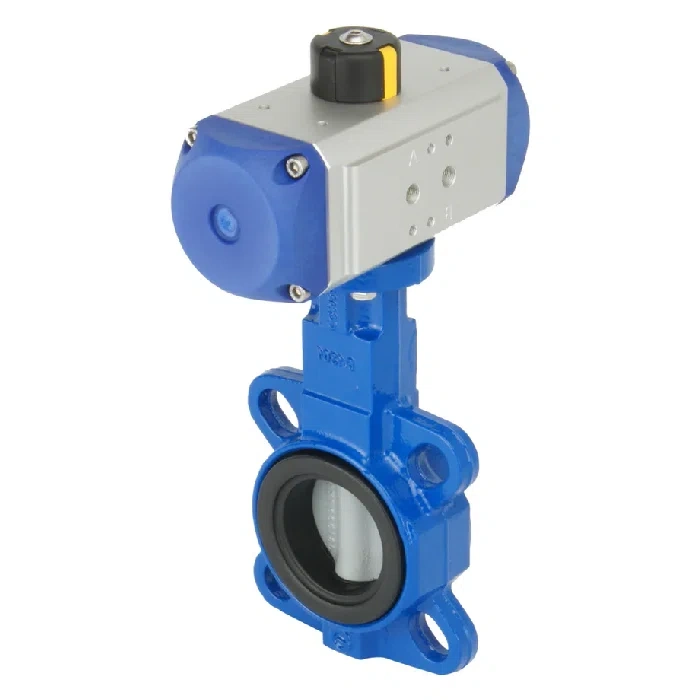
A pneumatic rotary actuator is a mechanical device that converts compressed air energy into rotational motion and torque. Unlike linear actuators that generate straight-line movement, rotary actuators are designed specifically to produce angular displacement, typically within a defined range such as 90°, 180°, or even multi-turn rotation depending on system requirements.
At its core, a pneumatic rotary actuator consists of a pressure chamber, piston or vane mechanism, seals, and a rotating output shaft. When compressed air enters the chamber, it pushes against internal components, generating force that is translated into rotational motion.
These actuators are widely used in industrial automation systems where controlled rotation is required, such as:
- Valve opening and closing systems
- Conveyor rotation mechanisms
- Robotic arm joints
- Packaging machinery
- Material handling systems
- Process control equipment
One of the main reasons for their popularity is their simplicity and reliability. Pneumatic systems use compressed air, which is clean, readily available in industrial environments, and safe for use in hazardous conditions.
The working principle of pneumatic rotary actuators is based on the conversion of air pressure into mechanical torque. When compressed air is introduced into one chamber of the actuator, it creates pressure that pushes internal components such as pistons or vanes. This force is then converted into rotational motion through a mechanical linkage system.
In most cases, the actuator operates in two stages:
Air Pressurization Phase
Compressed air enters one side of the actuator chamber, forcing the internal mechanism to move. This movement generates torque on the output shaft.
Return or Opposite Motion Phase
Depending on the actuator type, the return motion is achieved either by reversing air pressure (double-acting type) or by using a mechanical spring (single-acting type).
This simple yet effective mechanism allows pneumatic rotary actuators to achieve fast response times, high durability, and consistent performance even under demanding industrial conditions.
Selecting the right type of actuator is critical for achieving optimal performance. Pneumatic rotary actuators are generally categorized based on their internal mechanism and operating method.
Vane-type rotary actuators use a central shaft with one or more vanes attached. These vanes divide the internal chamber into sections. When compressed air is introduced on one side of the vane, it creates pressure that forces the shaft to rotate.
Key Characteristics:
- Compact structure
- Smooth rotational motion
- Suitable for limited-angle rotation
- Efficient energy conversion
- Fast response time
Advantages:
Vane actuators are highly efficient in applications requiring moderate torque and compact installation space. Their simple structure makes them cost-effective and easy to maintain.
Common Applications:
- Light automation systems
- Packaging equipment
- Small valve control systems
- Robotics and positioning devices
However, vane actuators may not be ideal for extremely high-torque applications due to structural limitations.
Rack-and-pinion pneumatic rotary actuators are among the most widely used in industrial environments. In this system, a linear rack gear is driven by pneumatic pressure, which then engages with a pinion gear to produce rotational movement.
Key Characteristics:
- High torque output
- Strong mechanical structure
- Suitable for heavy-duty applications
- Adjustable rotation angles
- High durability under harsh conditions
Advantages:
Rack-and-pinion designs offer excellent mechanical strength and are capable of handling larger loads compared to vane actuators. They also provide precise control over rotational movement.
Common Applications:
- Industrial valve automation
- Oil and gas pipelines
- Chemical processing plants
- Heavy machinery systems
- Water treatment facilities
Due to their robustness, rack-and-pinion actuators are often the preferred choice for demanding industrial environments.
Double-acting actuators use compressed air on both sides of the piston or mechanism. This allows controlled rotation in both clockwise and counterclockwise directions without relying on mechanical springs.
Key Characteristics:
- Bidirectional operation
- High control precision
- Suitable for continuous cycling
- Greater flexibility in automation systems
Advantages:
These actuators provide full control over rotational movement, making them ideal for automated systems requiring frequent directional changes.
Common Applications:
- Automated production lines
- Robotic systems
- Precision assembly equipment
- High-frequency valve operations
Single-acting actuators operate using compressed air in one direction only. The return motion is typically achieved through a spring mechanism.
Key Characteristics:
- Simple design
- Lower air consumption
- Fail-safe operation capability
- Limited directional control
Advantages:
Single-acting actuators are ideal for applications where safety and simplicity are prioritized. In case of air failure, the spring automatically returns the actuator to a default position, making them highly reliable in safety-critical systems.
Common Applications:
- Emergency shut-off valves
- Safety systems
- Basic automation tasks
- Low-cycle operations
Choosing the correct actuator requires careful evaluation of multiple technical and operational parameters. Below are the most important factors to consider:
Torque is one of the most critical selection criteria. The actuator must be capable of generating sufficient torque to operate the load under all working conditions, including startup, peak pressure, and emergency scenarios.
Different actuators are designed to operate under specific air pressure ranges. Ensuring compatibility between system pressure and actuator rating is essential for performance and safety.
Standard actuators typically offer 90° or 180° rotation, but customized configurations may be required for special applications.
Fast cycle times may be necessary in high-speed production environments, while slower, controlled motion may be preferred in precision systems.
Temperature, humidity, dust, and chemical exposure can significantly impact actuator performance. Material selection and sealing design must match environmental requirements.
Compact installations may require vane-type actuators, while heavy-duty applications may prioritize rack-and-pinion systems despite their larger size.
Ease of maintenance and availability of spare parts are important long-term considerations, especially in continuous production environments.
Pneumatic rotary actuators offer a wide range of benefits that make them highly attractive for industrial applications:
With fewer moving parts compared to hydraulic or electric systems, pneumatic actuators are less prone to mechanical failure.
Compressed air is a clean energy source, making pneumatic systems suitable for food, pharmaceutical, and chemical industries.
Initial investment and maintenance costs are generally lower compared to alternative actuation technologies.
Pneumatic systems provide rapid actuation, which is essential in high-speed automation processes.
Their straightforward structure allows for easy installation, operation, and maintenance.
Pneumatic rotary actuators are used across a wide range of industries:
- Oil and Gas: Valve automation in pipelines and refineries
- Water Treatment: Flow control systems in filtration and distribution
- Chemical Industry: Corrosive fluid handling systems
- Manufacturing: Assembly lines and robotic positioning
- Food and Beverage: Hygienic process control systems
- Energy Sector: Power plant valve systems
Their versatility makes them an indispensable component in modern industrial automation.
Proper maintenance ensures long service life and consistent performance:
- Regular inspection of air supply quality
- Lubrication of moving parts where required
- Monitoring of seal integrity
- Checking for air leaks
- Ensuring proper alignment during installation
- Periodic performance testing
Preventive maintenance significantly reduces downtime and operational risks.
As industrial automation evolves, pneumatic rotary actuators are also undergoing technological improvements:
1. Smart Integration
Increasing integration with IoT systems allows real-time monitoring of actuator performance.
2. Energy Efficiency Improvements
New designs focus on reducing air consumption while maintaining torque output.
3. Advanced Materials
Use of corrosion-resistant and lightweight materials improves durability and performance.
4. Compact and Modular Designs
Manufacturers are developing smaller, modular actuators for space-constrained applications.
5. Hybrid Systems
Combination of pneumatic and electric actuation technologies for enhanced control and flexibility.
Selecting the right pneumatic rotary actuator is a critical engineering decision that directly influences system performance, efficiency, and reliability. Understanding the differences between vane, rack-and-pinion, double-acting, and single-acting actuators helps ensure that the chosen solution aligns with operational requirements.
From torque capacity and environmental conditions to maintenance needs and future scalability, every factor plays a role in achieving optimal system performance. As industrial automation continues to evolve, pneumatic rotary actuators will remain a fundamental component in delivering precise, efficient, and reliable rotational motion across countless applications worldwide.
