
The fluorine lined butterfly control valve is a highly specialized flow control device designed for demanding industrial environments where corrosion resistance, chemical stability, and reliable flow regulation are essential. As modern industries continue to evolve toward higher efficiency, stricter environmental standards, and more aggressive process media, the demand for advanced corrosion-resistant valves has significantly increased.
Unlike conventional butterfly valves, fluorine lined versions incorporate a full lining of fluoropolymer materials—such as PTFE or FEP—within the valve body and sealing components. This design ensures exceptional resistance to highly corrosive substances, including strong acids, alkalis, oxidizing agents, and organic solvents. As a result, these valves are widely used in chemical processing, petroleum refining, pharmaceuticals, food production, metallurgy, power generation, and wastewater treatment systems.
The fluorine lined butterfly control valve is particularly valued for combining compact structure, lightweight design, reliable sealing performance, and precise flow control capabilities. It plays an essential role in modern process industries where safety, durability, and operational efficiency are top priorities.
The fluorine lined butterfly control valve operates using a relatively simple but highly effective mechanism. It consists of a circular disc mounted on a rotating shaft inside a valve body that is fully or partially lined with fluorine-based materials.
When the disc rotates parallel to the flow direction, the valve opens, allowing fluid to pass through with minimal resistance. When the disc rotates perpendicular to the flow, it restricts or completely blocks the flow path.
What distinguishes the fluorine lined version from standard butterfly valves is its internal lining. Materials such as PTFE (polytetrafluoroethylene), FEP (fluorinated ethylene propylene), or PFA (perfluoroalkoxy alkane) are applied to all wetted parts. These materials provide:
- Exceptional chemical inertness
- Low friction coefficient
- High thermal stability
- Excellent anti-corrosion performance
This structure ensures that even highly aggressive fluids do not come into contact with the metal body, significantly extending service life and improving operational safety.
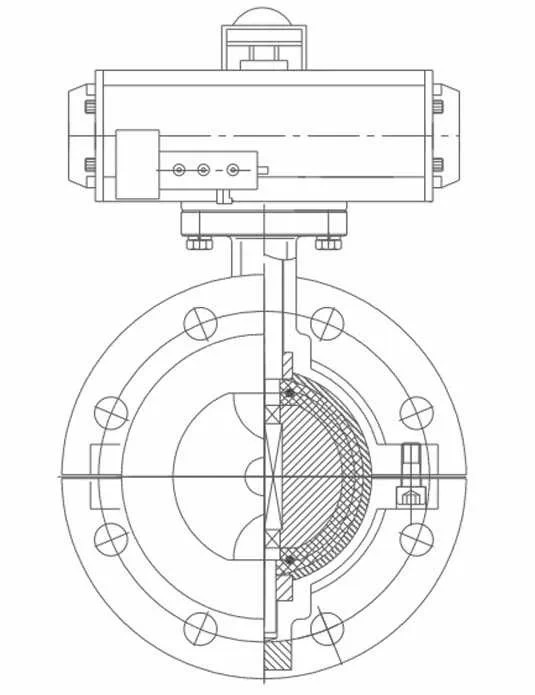
Fluorine lined butterfly control valves are designed with a combination of performance, safety, and durability in mind. Their key features include:
The fluoropolymer lining provides a protective barrier that resists nearly all industrial chemicals, including hydrochloric acid, sulfuric acid, nitric acid, sodium hydroxide, and various solvent mixtures.
Compared to gate valves or globe valves, butterfly valves require less space and are significantly lighter, making them easier to install and maintain in complex piping systems.
Soft sealing materials combined with fluorine lining ensure tight shutoff capability, minimizing leakage even under demanding operating conditions.
Most fluorine lined butterfly valves can operate effectively at temperatures up to approximately 180°C, depending on the specific lining material used.
When fully open, the disc design allows for a near-straight flow path, reducing pressure loss and improving system efficiency.
The combination of corrosion resistance and wear-resistant lining significantly extends the operational lifespan of the valve.
Different industrial requirements have led to the development of multiple configurations of fluorine lined butterfly valves.
This is the most common design, where the disc is centered in the valve body. It is widely used in low to medium pressure applications and offers cost efficiency and simplicity.
This design reduces friction between the disc and seat, improving sealing performance and extending service life. It is suitable for higher performance requirements.
Although less common in fully lined designs, triple offset configurations are used in extreme conditions requiring zero leakage and high-temperature resistance.
Fluorine lined butterfly control valves can be operated manually or integrated with automation systems using pneumatic or electric actuators. Automated versions are widely used in modern industrial control systems.
The fluorine lined butterfly control valve is essential in industries where conventional metal valves would fail due to corrosion or chemical attack.
Chemical Processing Industry
This is the largest application sector. The valve is used in handling acids, alkalis, and reactive chemical compounds in production, storage, and transfer processes.
Petroleum and Refining Industry
In petroleum refining, the valve is used in corrosive fluid handling systems, including desulfurization processes and chemical injection lines.
Pharmaceutical Industry
The high purity and contamination-free design make it suitable for pharmaceutical manufacturing, where hygiene and material compatibility are critical.
Food and Beverage Industry
Fluorine lined valves ensure sanitary flow control in food processing systems, especially where acidic or reactive ingredients are involved.
Metallurgy and Steel Industry
Used in pickling processes and chemical treatment lines, where strong acids are frequently used.
Power Generation Industry
Applied in chemical dosing systems, cooling water treatment, and flue gas desulfurization systems.
Wastewater Treatment
Highly resistant to corrosive wastewater, chemicals, and sludge, making it ideal for environmental protection systems.
Compared with conventional metal-seated valves, fluorine lined butterfly control valves offer several significant advantages:
- Superior corrosion resistance in harsh chemical environments
- Reduced maintenance requirements
- Lower overall system weight and installation cost
- Improved flow efficiency due to low pressure drop
- Enhanced safety in handling hazardous media
- Longer operational life cycle
These advantages make them a preferred choice in industries where chemical compatibility is a critical factor.
The development of fluorine lined butterfly control valves has been driven by continuous innovation in materials science and automation technology.
Advanced Fluoropolymer Materials
Modern valves use improved PTFE derivatives and composite fluoropolymers that enhance mechanical strength while maintaining chemical resistance.
Precision Molding and Lining Techniques
Advanced manufacturing methods ensure uniform lining thickness and stronger adhesion between metal and polymer surfaces, reducing the risk of delamination.
Smart Actuation Systems
Integration with electric and pneumatic actuators allows for precise flow control and remote operation in automated industrial systems.
Digital Monitoring Integration
Some modern valves are equipped with sensors that provide real-time feedback on position, temperature, and operational status, supporting predictive maintenance strategies.
Despite their advantages, fluorine lined butterfly control valves face several technical and operational challenges:
Limited Temperature Range
Fluoropolymer materials typically have temperature limitations, making them unsuitable for extremely high-temperature applications above 180°C–200°C.
Mechanical Wear Concerns
In high-abrasion environments, the soft lining material may experience wear over time, requiring careful material selection.
Higher Initial Cost
Compared to standard valves, fluorine lined versions are more expensive due to specialized materials and manufacturing processes.
Installation Sensitivity
Improper installation or misalignment can affect sealing performance and reduce service life.
Proper maintenance is essential to ensure the long service life and reliable performance of fluorine lined butterfly control valves, especially in corrosive and high-demand industrial environments. Although these valves are designed for low maintenance due to their excellent chemical resistance, routine inspection and correct operation practices are still necessary.
First, regular visual inspection should be conducted to check for external damage, corrosion on the valve body, or signs of leakage around the stem and sealing areas. Any abnormal wear should be addressed immediately to prevent system failure.
Second, the valve should be operated periodically even in low-duty applications to prevent sticking or buildup of deposits on the disc and sealing surfaces. Smooth rotation ensures the actuator and internal components remain in good working condition.
Third, avoid exceeding the recommended temperature and pressure limits, as fluoropolymer linings such as PTFE or FEP may deform under extreme conditions. Proper operating parameters help maintain sealing integrity and extend valve lifespan.
Fourth, ensure that pipeline flushing is performed before installation and during maintenance shutdowns to prevent solid particles or crystallized chemicals from damaging the lining surface.
Finally, when replacing parts or performing repairs, only use compatible components recommended by the manufacturer to avoid compromising corrosion resistance and sealing performance.
The global demand for fluorine lined butterfly control valves is steadily increasing, driven by several key factors:
- Expansion of chemical processing industries
- Increasing environmental regulations on corrosion-resistant systems
- Growth in wastewater treatment infrastructure
- Rising demand for high-purity pharmaceutical production
- Expansion of industrial automation and smart factories
Manufacturers are increasingly focusing on developing valves with improved durability, automation compatibility, and reduced lifecycle costs. Emerging markets in Asia-Pacific, particularly China and India, are expected to contribute significantly to future growth.
The future of fluorine lined butterfly control valves is closely linked to industrial automation and advanced material engineering.
Key development trends include:
- Integration with IoT-based monitoring systems
- Development of high-performance composite fluoropolymers
- Enhanced resistance to higher temperatures and pressures
- Smart diagnostic and predictive maintenance capabilities
- Environmentally friendly manufacturing processes
As industries continue to demand safer, more efficient, and more durable flow control solutions, fluorine lined butterfly valves are expected to play an increasingly important role in global industrial infrastructure.
Fluorine lined butterfly control valves represent a critical advancement in corrosion-resistant flow control technology. Their unique combination of chemical resistance, compact structure, and reliable sealing performance makes them indispensable in a wide range of industrial applications.
From chemical processing to wastewater treatment and pharmaceutical manufacturing, these valves ensure safe and efficient handling of aggressive media. While challenges such as temperature limitations and cost remain, ongoing technological innovation continues to expand their capabilities and application scope.
As global industries move toward higher efficiency, stricter environmental standards, and smarter automation systems, fluorine lined butterfly control valves will remain a key component in modern industrial flow control solutions, offering long-term reliability and operational safety.
