
With the rapid development of industrial automation, electric control valves have become indispensable components in modern process control systems. From oil and gas pipelines to chemical processing plants, power generation facilities, and water treatment systems, electric control valves play a critical role in regulating flow, pressure, and temperature. As industries increasingly demand higher efficiency, precision, and reliability, the control of electric control valve opening has evolved into a sophisticated engineering discipline.
At the heart of this evolution lies the electric actuator, often referred to as the "brain" of the valve. By converting electrical signals into mechanical motion, electric actuators enable accurate and responsive control of valve positions. Combined with advanced feedback systems and intelligent control algorithms, modern electric control valves deliver unparalleled performance in complex industrial environments.
This article provides a comprehensive overview of electric control valve opening control, including its basic principles, feedback mechanisms, control strategies, classification, selection considerations, and practical advantages in industrial applications.
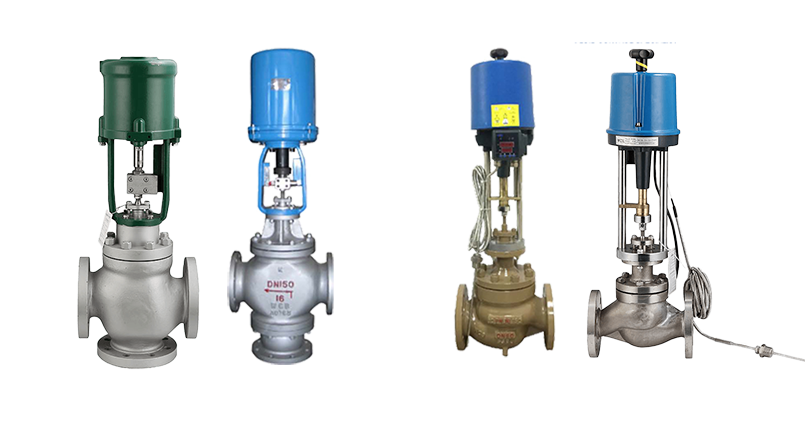
The operation of an electric control valve is centered around the electric actuator, which transforms control signals into mechanical movement. When an external control system—such as a distributed control system (DCS) or programmable logic controller (PLC)—sends a signal, the actuator receives and processes it.
Once the signal reaches the actuator's motor, the motor begins to rotate. This rotational motion is transmitted through a series of mechanical components, including reduction gearboxes, worm gears, and drive shafts. These transmission systems convert the motor's high-speed rotation into controlled, high-torque movement suitable for valve operation.
Depending on the valve type, the movement of the valve stem can be either linear or rotary:
- Linear motion is typical in globe valves, where the stem moves up and down to regulate flow.
- Rotary motion is common in butterfly and ball valves, where the stem rotates to adjust the valve opening.
The actuator precisely controls the degree of opening based on the input signal, enabling accurate flow regulation.
electric control valve actuators can respond to various types of control signals, which determine how the valve opening is adjusted.
The most commonly used signals are 4–20 mA current signals and 0–10 V voltage signals. These analog signals provide continuous control, allowing the valve opening to be adjusted proportionally. For example, a 4 mA signal may correspond to a fully closed position, while 20 mA represents a fully open position. Intermediate values allow fine control of the valve position.
In industries such as chemical processing, where precise flow control is essential, these analog signals enable highly accurate adjustments. By modifying the signal intensity, operators can control flow rates with exceptional precision.
In addition to analog signals, discrete signals are used for simple open/close operations. These signals control the forward and reverse rotation of the motor, enabling the valve to switch between fully open and fully closed positions.
Accurate control of valve opening requires continuous feedback to ensure that the actual position matches the desired setpoint. Without feedback, the system would lack precision and stability.
One of the most common feedback devices is the potentiometer. As the valve stem moves, the potentiometer's resistance changes proportionally. This variation is measured and converted into an electrical signal representing the valve position.
The control unit compares this feedback signal with the target value and adjusts the actuator accordingly, ensuring the valve reaches and maintains the desired position.
Hall sensors provide a more advanced feedback method based on magnetic field detection. When current flows through a Hall element in a magnetic field, a voltage is generated that corresponds to the field strength.
By integrating Hall sensors into the actuator, changes in valve position can be detected through variations in the magnetic field. This method offers high accuracy, durability, and resistance to environmental interference.
Photoelectric sensors use light to detect position changes. In an electric control valve system, a light emitter and receiver are positioned so that the valve's movement alters the light path.
As the valve opens or closes, it blocks or modifies the light signal, which is then converted into an electrical feedback signal. This method is highly precise and suitable for applications requiring non-contact measurement.
Modern electric control valve systems employ various control strategies to achieve optimal performance. These methods range from simple proportional control to advanced artificial intelligence-based approaches.
Proportional control is the most basic form of continuous control. It establishes a direct relationship between the input signal and the valve opening.
When the input signal changes, the actuator adjusts the valve position proportionally. This method provides smooth and responsive control, making it suitable for applications where moderate precision is sufficient.
However, proportional control alone may result in steady-state errors, especially in complex systems.
PID control—Proportional, Integral, and Derivative—is one of the most widely used control methods in industrial automation.
- Proportional (P): Responds to current error
- Integral (I): Eliminates accumulated error over time
- Derivative (D): Predicts future error trends
By combining these three elements, PID control achieves high accuracy, fast response, and stable operation. It minimizes overshoot and ensures that the valve reaches the desired position quickly and maintains it consistently.
PID controllers are extensively used in industries requiring precise flow, pressure, or temperature regulation.
Fuzzy control is based on fuzzy logic, which mimics human reasoning rather than relying solely on mathematical models. It converts expert knowledge into a set of rules that guide the control process.
This method is particularly effective in systems that are nonlinear, complex, or difficult to model mathematically. Fuzzy control offers strong adaptability and robustness, making it suitable for challenging industrial environments.
Neural network control represents the cutting edge of intelligent automation. By training artificial neural networks with large datasets, the system learns the relationship between input signals and valve behavior.
Once trained, the neural network can predict and adjust valve positions in real time. This approach is highly effective in systems with significant uncertainty or nonlinearity.
As artificial intelligence continues to advance, neural network control is expected to play an increasingly important role in electric control valve systems.
electric control valves can be classified based on their feedback capabilities:
- No feedback valves – Basic operation without position monitoring
- Two-position valves – Fully open or fully closed states
- Continuous feedback valves – Provide real-time position data
Valves with continuous feedback are preferred for high-precision applications, as they offer better control and monitoring. However, they are more expensive, requiring users to balance cost and performance.
For systems lacking continuous feedback, advanced control techniques can improve performance. One such method is the step PID controller, which adjusts the valve position incrementally based on error signals.
This approach uses pulse signals to drive the actuator forward or backward, achieving quasi-continuous control. While not as precise as true feedback systems, it significantly enhances performance in cost-sensitive applications.
electric control valves offer numerous advantages that make them ideal for modern industrial systems:
- Easy installation and integration with automation systems
- High reliability and low failure rates
- Precise control capabilities
- Reduced maintenance requirements
- Energy efficiency compared to pneumatic systems
Unlike pneumatic valves, electric control valves do not require compressors, air pipelines, or additional equipment. This simplifies system design and reduces operational costs.
electric control valves are widely used across various industries:
- Oil and Gas: Pipeline control and refinery operations
- Chemical Processing: Precise flow regulation of reactive materials
- Power Generation: Steam and cooling system control
- Water Treatment: Flow and pressure management
- HVAC Systems: Temperature and airflow regulation
Their versatility and reliability make them essential in both traditional and emerging industries.
Despite their advantages, electric control valves face challenges such as:
- Sensitivity to power supply fluctuations
- Initial investment costs
- Complexity in advanced control systems
However, ongoing technological advancements are addressing these issues. Future trends include:
- Integration with IoT and smart monitoring systems
- Development of energy-efficient actuators
- Increased use of AI-based control methods
- Enhanced cybersecurity for industrial control systems
electric control valve opening control has evolved from simple mechanical operation to a sophisticated system combining electronics, sensors, and intelligent algorithms. With the integration of advanced control methods such as PID, fuzzy logic, and neural networks, electric control valves now offer unmatched precision, reliability, and adaptability.
As industries continue to embrace automation and digitalization, the role of electric control valves will become even more critical. Their ability to integrate seamlessly with modern control systems and deliver consistent performance makes them a cornerstone of industrial efficiency and innovation.
Looking ahead, continuous advancements in technology will further enhance the capabilities of electric control valve systems, driving smarter, safer, and more sustainable industrial operations worldwide.