
Control valves are among the most important final control elements in industrial automation systems. They regulate the flow of liquids, gases, steam, and chemical media by adjusting the opening position of the valve plug, disc, or ball according to signals from a controller. In industries such as petrochemical processing, power generation, oil and gas, pharmaceuticals, mining, pulp and paper, water treatment, and food production, control valves directly influence process efficiency, safety, product quality, and energy consumption.
Because many industrial systems operate under demanding conditions—including high pressure, high temperature, corrosive chemicals, abrasive slurries, toxic fluids, or flammable gases—the sealing performance of a control valve is critical. A poorly sealed valve may cause leakage, process instability, product loss, safety incidents, environmental hazards, and higher maintenance costs.
Among the many valve design considerations, sealing technology remains one of the most important. Two of the most common sealing forms in modern control valves are soft sealing and hard sealing. Each offers unique performance advantages, limitations, and ideal application scenarios.
As industries demand tighter shutoff, longer service life, and greater reliability, selecting the proper sealing type has become an increasingly strategic engineering decision.
This article explores the fundamentals of control valve sealing, compares soft and hard sealing technologies, examines material selection, discusses application trends, and reviews the future of sealing innovation in modern process control.
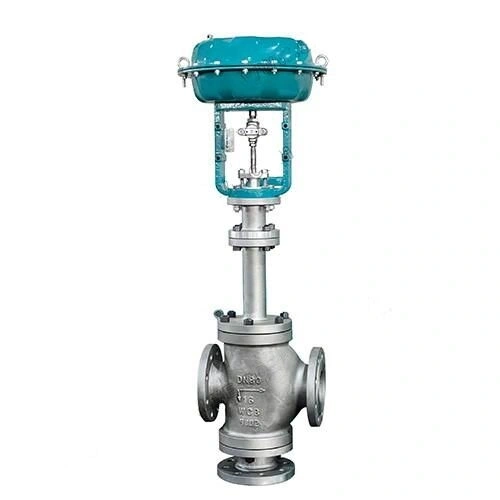
A control valve is a mechanically actuated device used to modulate process flow by changing the size of the flow passage. It is usually connected to an actuator—pneumatic, electric, or hydraulic—which receives commands from a process controller.
Typical control valve functions include:
- Flow regulation
- Pressure control
- Temperature control
- Level control
- Shutoff or isolation
- Mixing and diversion
Unlike manual valves, control valves must perform continuously and precisely under changing operating conditions.
Because they are often installed at critical control points, valve sealing integrity becomes essential.
The sealing system of a control valve determines how effectively the valve can stop unwanted flow when closed. It also influences:
- Leakage rate
- Energy efficiency
- Product purity
- Environmental compliance
- Process stability
- Safety performance
- Maintenance frequency
- Total lifecycle cost
Even small leakage through a control valve can create serious consequences in steam systems, hazardous chemical lines, oxygen service, LNG systems, or pressure-sensitive processes.
As emission regulations and plant efficiency targets become stricter, high-performance sealing is more important than ever.
Although there are multiple valve trim sealing methods such as plug sealing, spherical sealing, cage-guided sealing, and balanced plug systems, two broad sealing categories dominate the industry:
- Soft Sealing
- Hard Sealing
Each has different material structures, operating limits, and shutoff capabilities.
Soft sealing refers to a valve seat or plug arrangement in which at least one sealing surface is made from a non-metallic material.
Common soft sealing materials include:
- PTFE (Polytetrafluoroethylene)
- Reinforced PTFE
- PEEK
- Nylon
- EPDM rubber
- NBR rubber
- Viton / FKM
- UHMWPE
- Elastomer composites
These materials compress slightly when the valve closes, allowing tight surface contact with metal components.
1. Excellent Tight Shutoff
Soft sealing can often achieve bubble-tight shutoff or zero visible leakage under ideal conditions.
This makes it ideal where leakage cannot be tolerated.
2. Lower Closing Force
Because the material deforms slightly, the actuator typically requires less thrust or torque.
3. Good Surface Compensation
Soft materials compensate for minor machining imperfections, scratches, or misalignment.
4. Quiet Operation
Soft-seated valves often reduce closing noise and impact.
5. Cost Efficiency in Clean Service
For clean media at moderate conditions, soft seats can provide excellent performance at reasonable cost.
1. Lower Temperature Resistance
Many elastomers and plastics degrade at elevated temperatures.
2. Wear Sensitivity
Particles in the fluid can scratch, cut, or embed into soft surfaces.
3. Pressure Limits
Very high differential pressure may deform or extrude soft seat materials.
4. Chemical Compatibility Constraints
Some solvents, hydrocarbons, acids, or oxidizers attack specific polymers.
5. Aging Over Time
Thermal cycling and chemical exposure can harden, crack, or shrink materials.
Soft sealing is commonly used in:
- Water treatment systems
- Clean gas lines
- HVAC control systems
- Food processing lines
- Pharmaceutical processes
- Instrument air systems
- Low-pressure chemical dosing
- Clean utility services
Where cleanliness is high and conditions are moderate, soft sealing performs extremely well.
Hard sealing uses metal-to-metal contact between the valve plug and seat ring, often enhanced by hardened coatings or wear-resistant alloys.
Common hard sealing materials include:
- Stainless steel
- Stellite hardfacing
- Tungsten carbide
- Chrome carbide
- Inconel overlays
- Hastelloy alloys
- Duplex stainless steel
- Bronze alloys in select services
These materials are precision machined and lapped to form a tight metallic seal.
1. High Temperature Capability
Metallic seals tolerate temperatures far beyond polymer limits.
2. Superior Wear Resistance
Hard surfaces resist erosion caused by particles or flashing fluids.
3. Better Pressure Resistance
Hard seats perform reliably under high differential pressure.
4. Strong Chemical Durability
Many alloys resist aggressive corrosive media.
5. Longer Service Life in Severe Duty
In harsh environments, hard sealing often outlasts soft seats significantly.
1. Leakage Higher Than Soft Sealing
Although highly precise, metal-to-metal sealing usually cannot equal true zero leakage of soft seats.
2. Higher Machining Cost
Precision lapping and hardfacing increase manufacturing complexity.
3. Greater Actuation Force
Metal sealing surfaces may require higher closing force.
4. Noise and Impact
Hard contact surfaces may generate more noise during shutoff.
Hard-seated control valves are widely used in:
- Steam systems
- Power plants
- Refining units
- Petrochemical plants
- Slurry service
- High-temperature gas systems
- LNG precooling sections
- Abrasive mining processes
- High-pressure chemical reactors
Valve sealing performance is often measured by shutoff leakage classes such as ANSI/FCI 70-2 or IEC standards.
Typical examples:
- Class IV: Standard metal seat shutoff
- Class V: Tighter metal seat shutoff
- Class VI: Soft seat / bubble-tight shutoff
Soft seats are commonly selected for Class VI requirements. Hard seats are often chosen for Class IV or V severe-duty service.
Choosing seal type is only the first step. Material compatibility determines long-term success.
For Soft Seals:
Consider:
- Temperature range
- Fluid chemistry
- Swelling resistance
- Compression set behavior
- FDA compliance if food grade
For Hard Seals:
Consider:
- Corrosion resistance
- Galling tendency
- Thermal expansion compatibility
- Abrasion resistance
- Surface hardness
Poor material pairing can cause rapid failure.
Soft seats require relatively clean media. Even small solid particles can become trapped between seat and plug.
This may cause:
- Permanent scratches
- Leakage increase
- Seat deformation
- Repeated maintenance
For pipelines carrying rust scale, catalyst fines, sand, or solids, hard sealing is usually safer.
Plants should also perform proper flushing during startup to prevent debris damage.
Low Temperature / Cryogenic Service
Some engineered PTFE grades perform well at low temperature, but material contraction must be considered.
Hard seats with specialized design are common in cryogenic LNG applications.
High Temperature Service
Steam, hot oil, and reactor service usually favor hard-seated valves due to polymer degradation risks.
For toxic, flammable, or hazardous fluids, leakage control is critical.
Examples:
- Chlorine
- Ammonia
- Hydrogen
- VOC solvents
- Sour gas
- Acid streams
Engineers must balance shutoff tightness with durability. In some cases, a corrosion-resistant hard seat plus fugitive-emission packing is the best solution.
Oil and Gas
Often hard sealing due to pressure, erosion, and temperature.
Water Utilities
Soft sealing frequently preferred for bubble-tight shutoff.
Food and Beverage
Soft sealing with sanitary materials common.
Mining
Hard sealing preferred because of abrasion.
Power Generation
Steam valves typically use hard sealing.
Pharmaceutical
Soft sealing for cleanliness and tight shutoff.
Soft Seat Maintenance
Watch for:
- Seat cuts
- Swelling
- Hardening
- Chemical attack
- Compression fatigue
Hard Seat Maintenance
Watch for:
- Seat wire drawing
- Surface scoring
- Erosion grooves
- Hardfacing damage
- Misalignment wear
Predictive maintenance programs can reduce downtime significantly.
Advanced Polymer Seats
New composites improve:
- Heat resistance
- Chemical compatibility
- Wear life
Precision Surface Finishing
Improved lapping technology enhances hard-seat shutoff performance.
Coating Technologies
HVOF coatings and carbide layers extend severe-service life.
Smart Valve Monitoring
Modern digital positioners can detect:
- Excess friction
- Seat wear
- Leakage trends
- Actuator load changes
This helps schedule maintenance before failure.
Ask these questions:
- What leakage class is required?
- What is the operating temperature?
- Is the media clean or abrasive?
- What is the pressure differential?
- Is corrosion severe?
- How costly is downtime?
- How often does the valve cycle?
- Is zero leakage mandatory?
Choose soft sealing when tight shutoff is top priority in clean moderate service.
Choose hard sealing when durability matters most in severe service.
Selecting Soft Seat for Dirty Service
Leads to fast wear and leakage.
Selecting Hard Seat Where Bubble-Tight Shutoff Is Mandatory
May fail process isolation goals.
Ignoring Thermal Expansion
Can distort sealing geometry.
Using Wrong Elastomer
Causes swelling or cracking.
Underestimating Cycle Frequency
Frequent stroking increases wear.
As industrial plants pursue higher efficiency and lower emissions, sealing technology will continue evolving.
Future valves may include:
- Self-adjusting seats
- AI wear prediction
- Nanocoatings
- Lower-friction trim systems
- Hybrid metal/polymer sealing systems
- Faster replaceable cartridge seats
The demand for smarter, longer-lasting control valves is expected to grow worldwide.
Control valve sealing is a critical factor in process reliability, safety, and operating cost. Both soft sealing and hard sealing play essential roles across industry.
Soft sealing offers excellent shutoff performance and is ideal for clean, moderate-duty systems requiring minimal leakage. Hard sealing provides the durability, pressure resistance, and temperature capability needed for harsh industrial environments.
There is no universal best choice. The correct decision depends on fluid conditions, pressure, temperature, leakage requirements, maintenance strategy, and lifecycle economics.
As automation systems become more advanced, selecting the right control valve sealing technology will remain one of the most important engineering decisions in flow control design.