
In modern industrial operations, efficient fluid control is crucial for maintaining safety, productivity, and energy efficiency. Among the most reliable solutions for regulating the flow of liquids and gases is the electric gate valve. These valves combine the traditional advantages of gate valve design with modern electric actuation, offering precise, automated control in complex industrial systems.
Electric gate valves are widely applied in sectors such as oil and gas, water treatment, chemical processing, power generation, and HVAC systems. Their ability to operate remotely, handle high pressures, and maintain tight sealing under diverse operating conditions makes them an essential component in both existing and newly designed automated facilities.
This article explores the fundamentals of electric gate valves, their technical features, operational benefits, comparison with other valve types, installation considerations, and emerging trends driving their adoption in modern industrial automation.
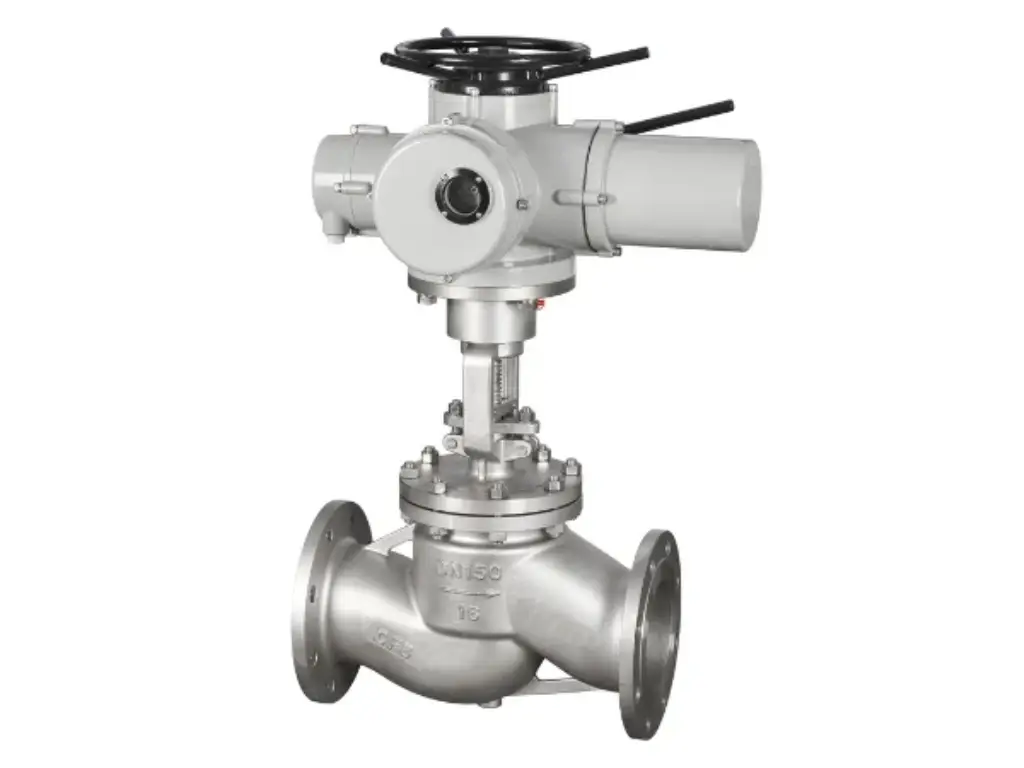
An electric gate valve is a type of valve that uses an electric actuator to move a gate, which either blocks or permits the flow of a fluid. Unlike conventional manual gate valves, electric gate valves do not require human intervention for operation. This remote control capability provides substantial advantages, including enhanced safety, operational efficiency, and precise flow management.
Electric actuators are typically powered by AC or DC electricity and can be integrated into fully automated control systems, allowing operators to monitor and adjust valve positions from a central control room or via networked systems. This integration ensures accurate control, reduces the risk of operational errors, and facilitates predictive maintenance.
Key features of electric gate valves include:
- High-performance sealing to prevent leakage
- Remote operation and automation compatibility
- Durability under high pressure and temperature conditions
- Minimal maintenance compared to pneumatic or manual alternatives
These characteristics make electric gate valves indispensable in modern industries where downtime, leakage, or inefficient flow control can lead to significant operational losses.
While both electric gate valves and electric globe valves are automated solutions for flow control, they differ in design, operation, and performance, making each suitable for specific applications.
The gate valve relies on a wedge-shaped gate that moves linearly to engage the valve seat. This continuous contact creates a self-sealing effect, ensuring tight closure even under high-pressure conditions. However, repeated operation can cause mechanical wear on the sealing surfaces, especially when the valve is nearly closed and the pressure differential is high. Despite this, the gate valve’s inherent self-sealing ability often results in better leak-proof performance compared to other valve types.
The globe valve, in contrast, uses a disc that moves perpendicular to the seat. When fully open, the disc no longer contacts the seat, reducing wear. However, if the fluid contains solid particles, the sealing surfaces are more vulnerable to erosion or damage. Globe valves typically provide more precise throttling capabilities but with higher flow resistance compared to gate valves.
Gate valves are generally taller and shorter in overall length than globe valves, particularly stem-operated gate valves. This vertical design requires careful consideration of installation space, especially in environments with height limitations. Globe valves have more compact vertical profiles but occupy longer horizontal space, making them advantageous in certain piping layouts.
One of the most significant advantages of gate valves is their low flow resistance. When fully open, the fluid flows in a straight path with minimal obstruction, creating a low-pressure drop across the valve. Typical gate valves have a flow resistance coefficient of 0.08–0.12, while globe valves range between 3.5–4.5. This efficiency is particularly important in high-volume pipelines or systems where maintaining consistent pressure is critical.
Gate valves generally require less opening and closing force, which allows for smaller actuators and reduced energy consumption during automated operation. Globe valves, due to their higher resistance and throttling function, often require larger actuators to achieve smooth movement, particularly under high-pressure conditions.
Understanding the components of an electric gate valve helps explain why they are reliable and versatile in modern industrial systems. Key elements include:
- Valve Body – The main structure housing the flow path. Often made of cast steel, stainless steel, or ductile iron for high pressure and corrosion resistance.
- Gate/Wedge – The internal component that moves linearly to block or allow fluid flow. Designs may vary between solid wedge, flexible wedge, or parallel slide gates.
- Valve Seat – Provides the sealing surface against which the gate presses to stop flow. Materials include metal or resilient coatings, depending on media and temperature requirements.
- Stem – Connects the gate to the actuator and transmits motion. Stem design can be rising or non-rising, affecting installation height and visual position indication.
- Electric Actuator – Converts electrical energy into mechanical movement, allowing precise and remote control. Actuators may be AC or DC powered, with integrated control systems for position feedback, torque monitoring, and safety interlocks.
- Packing and Seals – Prevent leakage along the stem and gate interfaces. Materials are selected based on pressure, temperature, and media type.
Each component is engineered to provide long service life, minimal maintenance, and reliable sealing performance, even in challenging industrial environments.
Electric gate valves are widely used across industries due to their ability to handle high pressure, large flow rates, and automated control. Key applications include:
In pipelines, refineries, and offshore platforms, electric gate valves regulate the flow of crude oil, natural gas, and refined products. Their remote operation is essential for safety in hazardous environments, where manual intervention could expose workers to risks.
Municipal water systems use electric gate valves to manage flow in high-pressure water pipelines, pumping stations, and filtration systems. Automation allows operators to control valve operation remotely, optimize distribution, and quickly isolate sections during maintenance or emergencies.
Chemical plants require precise control over corrosive or high-temperature fluids. Electric gate valves, with specialized materials such as stainless steel, carbon steel, or high-alloy alloys, ensure long-term reliability and prevent leaks that could compromise safety or product quality.
In thermal, nuclear, and renewable power plants, electric gate valves manage cooling water, steam lines, and feedwater systems. Their low flow resistance and high-pressure capacity make them ideal for large-scale fluid management where efficiency is critical.
Large-scale heating, ventilation, and air conditioning systems benefit from automated gate valves to regulate water, steam, or chilled fluid flow. Integration with building management systems allows for real-time control, load balancing, and energy efficiency.
Electric actuation allows operators to open or close valves remotely, reducing the need for on-site manual labor and enhancing safety, especially in hazardous or hard-to-reach locations.
Actuators can provide accurate positioning, enabling precise control of flow rates, which is particularly valuable in chemical processes, water treatment, and industrial automation.
Electric gate valves are designed for long service life, capable of operating under high pressures, temperatures, and corrosive media with minimal maintenance.
Automation reduces manual labor and operational errors, while low flow resistance minimizes energy losses in pumping systems, contributing to cost-efficient operation.
Electric gate valves can be integrated with alarm systems, remote shutoff protocols, and interlocks, enhancing plant safety and compliance with industry standards.
To maximize performance and longevity, several factors must be considered during installation:
- Space Requirements – Rising stem gate valves require vertical clearance, while non-rising stem valves offer more compact installation.
- Electrical Supply – Ensure actuators receive stable AC or DC voltage compatible with their design.
- Alignment – Proper alignment of the gate and seat prevents wear and leakage.
- Environmental Protection – Actuators should be IP-rated for outdoor or corrosive environments.
- Routine Inspection – Regularly check packing, seals, and actuator function to prevent leaks and ensure smooth operation.
Maintenance is generally low but critical for high-pressure or high-temperature systems, where even minor leaks can have operational and safety consequences.
The industrial automation landscape is evolving rapidly, and electric gate valves are evolving with it. Key trends include:
Modern electric actuators can transmit real-time data to centralized control systems, enabling predictive maintenance, performance monitoring, and remote diagnostics.
Advanced actuators reduce electric consumption, while low-resistance gate designs minimize energy loss in high-volume pipelines.
High-performance alloys, coatings, and resilient materials allow electric gate valves to handle corrosive, abrasive, or high-temperature media, expanding their application range.
Integration with digital systems allows for automated reporting, flow optimization, and remote operation, aligning with Industry 4.0 and smart manufacturing initiatives.
Some industrial facilities deploy dual-actuation or hybrid systems combining electric and manual actuation to ensure operational continuity during power outages or actuator failures.
Electric gate valves represent a critical advancement in industrial flow control, combining the traditional advantages of gate valves with the precision and automation benefits of electric actuation. From oil and gas pipelines to municipal water systems, power generation, and chemical processing, these valves enable safe, efficient, and reliable operation across diverse industrial environments.
As automation, smart monitoring, and industrial digitalization continue to grow, electric gate valves will play an increasingly central role in achieving operational excellence, energy efficiency, and safety compliance. Their ability to handle high pressures, offer precise flow control, and integrate with modern control systems ensures they will remain indispensable in industrial infrastructure for years to come.