
Self-operated globe control valves have become a cornerstone in modern industrial process management. In many industries, precise control over flow, pressure, and temperature is essential to maintain product quality, operational efficiency, and safety. Traditional control systems rely heavily on external actuators, electric controllers, and pneumatic devices, which introduce complexity, increase installation costs, and require continuous maintenance. Self-operated globe control valves, however, leverage the energy of the process medium itself, simplifying the control system while maintaining high accuracy and responsiveness.
By integrating sensing elements, a valve body, and a self-contained actuation mechanism, these valves automatically adjust flow, pressure, or temperature in response to changing process conditions. This makes them ideal for industries such as petrochemicals, chemical manufacturing, power generation, oil and gas pipelines, water treatment, and HVAC systems. These valves not only reduce dependency on external systems but also enhance safety and reliability, making them a preferred choice for modern automated processes.
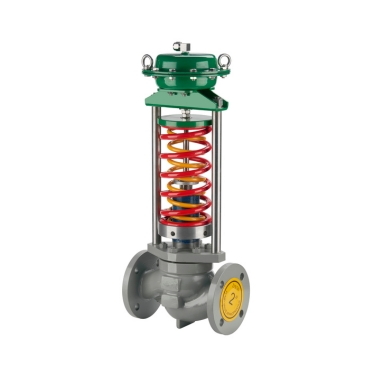
At its core, a self-operated globe control valve is designed to respond automatically to a process variable. Unlike conventional valves, which require external actuators or controllers, self-operated valves function independently by using the medium's own energy—steam, air, water, or gas—to achieve precise control.
The main types of self-operated globe valves include:
- Pressure-Regulating Valves: Automatically maintain downstream or upstream pressure within a set range, protecting equipment and maintaining process stability.
- Flow-Control Valves: Maintain a constant flow rate in pipelines, chemical dosing systems, or cooling circuits.
- Temperature-Control Valves: Adjust the flow of heating or cooling media to maintain a specific temperature, essential in heat exchangers, reactors, or HVAC systems.
These valves are particularly effective in systems where external control sources are unavailable, unreliable, or too expensive to implement. By converting process energy into mechanical motion, they offer precise, reliable, and energy-efficient regulation.
The design of a self-operated globe control valve is carefully engineered to ensure stability, precision, and durability. It typically consists of:
The valve body is usually of globe design, which allows accurate throttling and precise flow control. The spherical or cylindrical body contains a movable plug and a fixed seat, which together regulate the process medium. Globe valves are favored over other designs like ball or butterfly valves for self-operated applications due to their linear flow characteristics and ability to handle high differential pressures.
Materials for the valve body are chosen based on the process medium and conditions. Stainless steel, carbon steel, and specialized alloys are common, while high-temperature or corrosive environments may require nickel alloys, duplex stainless steel, or titanium.
The trim includes the plug, stem, and seat assembly. Its design determines the valve's flow characteristics, control accuracy, and noise performance. The plug may be of standard or equal percentage type, depending on whether linear or nonlinear flow control is needed. In high-performance applications, anti-cavitation trims or noise-reducing designs are incorporated to extend valve life and improve operational reliability.
The sensing element, often a diaphragm, bellows, or capsule, detects changes in the process variable. For pressure regulation, the diaphragm expands or contracts in response to pressure fluctuations. For temperature control, a fluid-filled bulb or thermowell detects temperature changes. The sensing element converts these variations into mechanical motion, directly operating the valve stem or plug.
Unlike conventional valves, the actuation is self-contained. The sensing element applies force to the valve stem, opening or closing the valve to maintain the desired setpoint. The mechanism may include springs or counterweights to provide balance, stability, and fail-safe operation. The simplicity of this mechanism ensures minimal maintenance and immediate response to process changes.
Self-operated globe valves eliminate the need for electric or pneumatic actuators, positioners, and controllers. This significantly reduces the complexity of piping and instrumentation diagrams, simplifies installation, and lowers the likelihood of wiring or pneumatic failures. In plants with multiple control points, this can reduce project costs and speed up commissioning.
By harnessing the energy of the medium itself, self-operated valves consume no external energy. This reduces operational costs, conserves resources, and contributes to environmentally sustainable practices, especially in systems that operate continuously or in remote locations.
Globe valves inherently provide precise flow control due to their linear or equal percentage characteristics. Combined with the direct mechanical actuation from the sensing element, self-operated valves maintain stable process variables even under fluctuating conditions. This reliability minimizes process interruptions, product losses, and potential safety hazards.
These valves are highly versatile and can handle a wide variety of media, including water, steam, air, natural gas, and various chemicals. They are suitable for corrosive or abrasive environments when made from appropriate materials, making them applicable across a broad spectrum of industries.
Self-operated globe valves are often designed with fail-safe features. For example, pressure-reducing valves will automatically lower downstream pressure in case of sudden inlet spikes. Temperature control valves can shut off or divert flow to prevent overheating or freezing. These fail-safe mechanisms protect equipment, personnel, and the environment from process hazards.
In chemical processing, precise control of pressure, flow, and temperature is essential for reaction efficiency and product quality. Self-operated globe valves regulate steam supply, chemical dosing, and solvent flow in reactors and heat exchangers. Their ability to operate independently ensures continuous production, even in remote or complex installations.
For instance, a chemical plant may use self-operated pressure-reducing valves to stabilize steam pressure for multiple heat exchangers. The valves respond automatically to variations in steam demand, maintaining consistent process conditions and preventing damage to sensitive equipment.
Steam and water systems in power plants demand reliable control to optimize turbine efficiency, boiler operation, and feedwater flow. Self-operated globe valves manage pressure in steam lines, regulate feedwater in boilers, and ensure uniform temperature distribution in heating systems. By eliminating external control devices, they reduce complexity and provide a robust solution for continuous operation.
Municipal water treatment systems use self-operated globe valves to maintain water pressure, flow rates, and chemical dosing. Pressure-reducing valves prevent over-pressurization in pipelines, while flow-control valves ensure precise dosing of treatment chemicals. The reliability of these valves helps prevent service interruptions, minimize leakage, and improve overall operational efficiency.
In the oil and gas sector, maintaining stable pressure and flow is critical for safe and efficient pipeline operation. Self-operated globe valves regulate gas pressure in distribution lines, control steam injection in enhanced oil recovery processes, and manage flow in refineries. Their ability to operate in high-pressure, high-temperature, and corrosive environments makes them suitable for demanding subsea and onshore applications.
Temperature regulation in heating and cooling systems is vital for energy efficiency and operational safety. Self-operated temperature control valves adjust flow rates of hot water, steam, or chilled water to maintain consistent temperatures in buildings, industrial processes, or manufacturing lines. Their autonomous operation reduces the need for frequent manual adjustments or complex control loops.
Selecting the right materials is critical for valve longevity and performance. Stainless steel and carbon steel are common choices, while high-temperature, corrosive, or abrasive fluids may require special alloys, coatings, or composite materials.
Self-operated globe valves must be rated for the maximum pressure and temperature they will encounter. Overloading the valve can lead to wear, leakage, or catastrophic failure. Proper sizing and material selection ensure reliability in all operating conditions.
Choosing the appropriate flow characteristic—linear, equal percentage, or quick-opening—is essential to maintain control stability. Linear characteristics are suitable for consistent flow regulation, equal percentage for wide-range throttling, and quick-opening for on/off service.
Most self-operated valves allow manual setpoint adjustments. Proper calibration ensures the valve maintains the desired process variable accurately. For example, adjusting a pressure-reducing valve's setpoint involves compressing or releasing the spring connected to the diaphragm, directly controlling downstream pressure.
Although these valves are low-maintenance, periodic inspection is necessary. Diaphragms, seats, and springs may wear over time, especially in high-pressure or high-temperature systems. Removable covers and modular trim designs facilitate easy maintenance without dismantling the entire valve or pipeline.
- Proper Installation Orientation: Incorrect orientation can impair valve performance. Many self-operated valves are directional, requiring correct alignment with the flow.
- Protection Against Pulsation: High-pressure fluctuations can damage the sensing element. Installing pulsation dampeners or strainers may be necessary.
- Temperature Insulation: For temperature control valves, the sensing element must be protected from extreme heat or cold.
- Regular Inspection: Even low-maintenance valves benefit from routine checks for wear, corrosion, or leakage. Replacing worn diaphragms or seats prevents performance degradation.
- Start-Up Procedures: Gradual system pressurization prevents shock to the valve and extends service life.
Modern self-operated globe valves have evolved significantly:
- High-Temperature and Corrosion-Resistant Materials: Enable operation in extreme steam, chemical, and seawater conditions.
- Compact and Lightweight Designs: Reduce footprint and simplify retrofitting into existing systems.
- Integrated Digital Monitoring: Some valves now feature sensors that transmit real-time process data, combining traditional self-operation with IoT and smart plant monitoring.
- Noise and Vibration Reduction: Advanced trim designs minimize cavitation and operational noise, improving both safety and longevity.
These innovations allow self-operated globe valves to meet increasingly stringent industrial requirements while maintaining simplicity and reliability.
A textile factory implemented self-operated pressure-reducing globe valves to maintain consistent steam pressure for dyeing machines. The valves automatically adjusted flow based on downstream pressure, ensuring uniform fabric color, reducing energy consumption by 15%, and eliminating manual interventions.
A city water authority installed pressure-reducing valves to stabilize water pressure in its distribution network. The valves prevented pipeline over-pressurization, reduced leakage, and improved reliability, minimizing maintenance calls and increasing public satisfaction.
A chemical plant replaced conventional actuated valves with self-operated temperature control valves on multiple reactors. The valves maintained precise temperatures, prevented product loss due to overheating, and reduced the frequency of manual interventions, improving both safety and operational efficiency.
Self-operated globe valves contribute to sustainable industrial practices:
- Energy Efficiency: No external power needed, reducing electricity consumption and operating costs.
- Leak Prevention: Accurate throttling minimizes fluid loss and potential environmental contamination.
- Fail-Safe Design: Automatic response to pressure or temperature surges prevents equipment damage and potential safety hazards.
Compliance with international standards such as API, ANSI, and ISO ensures these valves meet strict environmental and safety regulations.
- Smart Integration: Combining self-operated valves with digital monitoring and predictive maintenance systems for enhanced plant intelligence.
- Advanced Materials: Introduction of ceramics, titanium, and high-performance alloys for extreme conditions.
- Multi-Function Valves: Capable of simultaneously regulating pressure, flow, and temperature in a single compact unit.
- IoT Connectivity: Self-operated valves transmitting real-time data for system optimization and remote monitoring.
These trends indicate that self-operated globe valves will continue to play a vital role in modern, automated, and energy-efficient industrial operations.
Self-operated globe control valves represent a powerful combination of simplicity, efficiency, and reliability. Their ability to regulate flow, pressure, and temperature without external energy makes them ideal for industries seeking cost-effective and robust control solutions. From chemical plants to power stations, water treatment facilities, oil and gas pipelines, and HVAC systems, self-operated valves ensure consistent process performance, enhance safety, and reduce operational complexity.
With ongoing innovations in materials, design, and digital monitoring, these valves are set to remain indispensable components in industrial automation, offering an optimal balance between traditional mechanical reliability and modern smart control requirements.
As a leading control valve manufacturer in China, we provide high-quality self-operated globe control valves engineered for precision, durability, and reliability, supporting diverse applications across industries worldwide.
