
As industrial automation continues to advance, the demand for reliable, precise, and energy-efficient flow control solutions has never been greater. Among the most widely adopted valve technologies, electric actuated ball valves have become a cornerstone in modern process control systems. Combining the simplicity of ball valve design with the accuracy of electric actuation, these valves play a critical role in industries such as oil and gas, power generation, water treatment, chemical processing, HVAC, and manufacturing automation.
Electric actuated ball valves are designed to regulate, start, stop, or modulate fluid flow using an electric motor-driven actuator. Unlike manual valves, electric actuation allows for remote operation, integration with control systems, and precise positioning. Compared to pneumatic alternatives, electric ball valves offer distinct advantages in precision, energy efficiency, and system integration—especially in facilities where compressed air infrastructure is limited or unavailable.
This article explores the working principles of electric actuated ball valves, their key benefits, and a detailed comparison with pneumatic ball valves, helping engineers, operators, and decision-makers choose the most suitable solution for their applications.
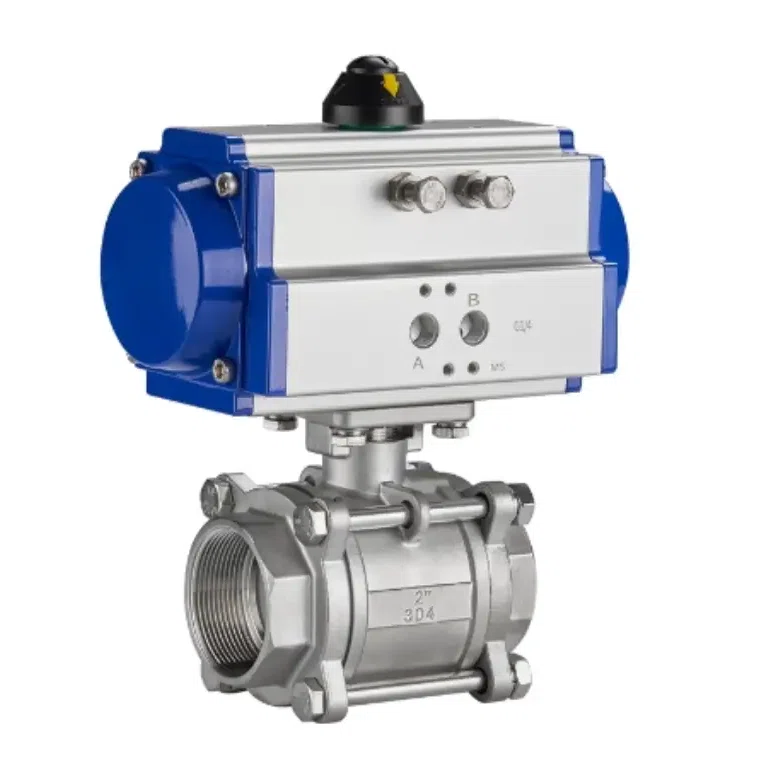
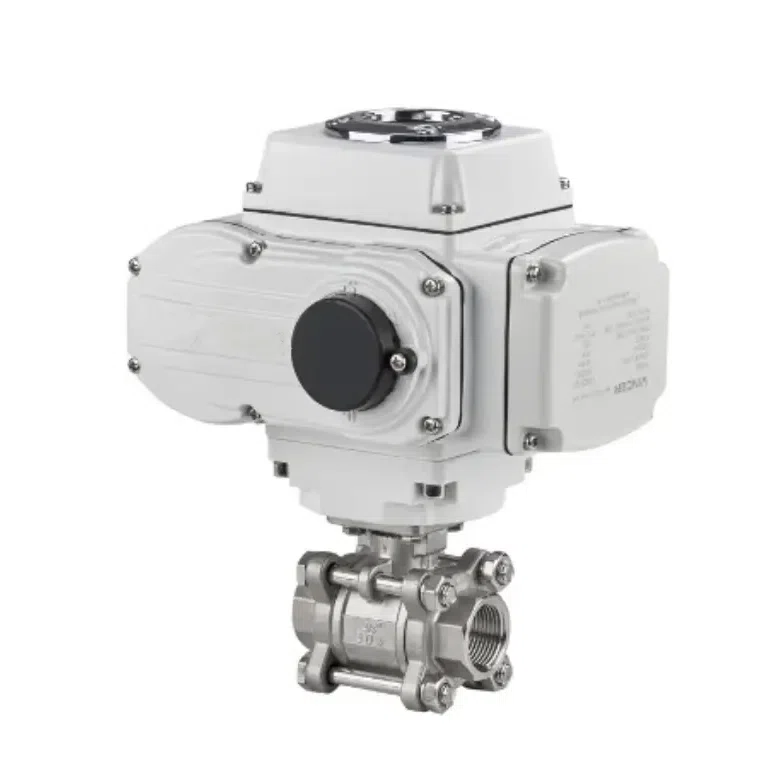
An electric actuated ball valve consists of two primary components:
- The Ball Valve Body – featuring a spherical ball with a central bore that rotates 90 degrees to control flow.
- The Electric Actuator – powered by electricity to drive the valve open, closed, or to a specific intermediate position.
When an electrical signal is sent from a control system, the actuator rotates the ball to the desired angle. This allows electric ball valves to function not only as on/off isolation devices but also as modulating control valves, providing accurate flow regulation.
Electric actuators are commonly available in various voltage options such as 24V DC, 110V AC, and 220V AC, making them adaptable to different industrial environments. Advanced models can be equipped with position feedback, limit switches, torque protection, and communication protocols for seamless automation integration.
Electric ball valves are widely used across industries due to their flexibility and reliability:
- Water and Wastewater Treatment: Precise flow control and remote operation in pumping stations and treatment plants.
- Oil and Gas: Automated isolation and control in pipelines, terminals, and processing facilities.
- Chemical Processing: Accurate modulation for handling corrosive and hazardous fluids.
- Power Plants: Flow regulation for cooling water, fuel supply, and auxiliary systems.
- HVAC Systems: Automated control of chilled water, hot water, and steam.
- Manufacturing Automation: Integration with PLC and DCS systems for process efficiency.
Their ability to operate without compressed air makes electric actuated ball valves especially attractive in remote locations or compact installations.
While both pneumatic and electric ball valves serve similar functions, their performance characteristics differ significantly. Below is a detailed comparison of the two technologies.
Rotation speed refers to the time required for the ball to complete a 90-degree turn from fully open to fully closed or vice versa.
For valves of the same size, electric actuated ball valves generally have a slower rotation speed compared to pneumatic ball valves. Pneumatic actuators can achieve rapid actuation due to the instant release of compressed air, making them suitable for emergency shutoff or high-speed operations.
Electric actuators, on the other hand, prioritize controlled and stable movement rather than speed. While slower, this controlled actuation reduces mechanical stress on valve components, contributing to improved operational stability and longer service life. In most industrial processes where ultra-fast actuation is not critical, the slightly lower speed of electric ball valves is not a disadvantage.
The life span of a valve system depends on component durability, maintenance requirements, and operating conditions.
Pneumatic ball valves typically have fewer internal components, making them simpler in construction. This simplicity often results in longer actuator life and easier maintenance. However, pneumatic systems rely heavily on air quality. Moisture, oil contamination, or pressure fluctuations in compressed air systems can negatively impact performance and reliability.
Electric actuated ball valves contain more internal components, including electric motors, control boards, gear assemblies, and limit switches. While these components require proper maintenance, modern electric actuators are designed with sealed housings, overload protection, and advanced electronics that significantly improve durability.
When properly installed and maintained, electric ball valves offer excellent long-term reliability, especially in clean, stable electrical environments.
Precision, also known as modulation capability, is the ability of a valve to stop at intermediate positions to regulate flow accurately.
Both pneumatic and electric actuators can perform modulating control, but electric actuated ball valves offer superior precision. Electric actuators respond to exact electrical control signals, allowing the valve to open or close by precise degrees. This makes them ideal for applications requiring fine flow control.
Pneumatic actuators achieve modulation by adjusting air pressure. However, air leaks, pressure drops, or fluctuations can affect positioning accuracy. Even minor variations in air supply can result in inconsistent valve positions.
In contrast, electric actuators maintain stable positioning regardless of external factors, making them the preferred choice for high-precision process control applications.
Energy efficiency is a critical factor in modern industrial operations.
Electric actuated ball valves consume less energy overall compared to pneumatic systems. Electric actuators only draw power during valve movement and consume minimal energy when holding a position.
Pneumatic systems, however, require continuous operation of air compressors, air dryers, filters, and distribution networks. These components consume significant energy, even when the valve itself is not actively moving. Energy losses associated with compressed air generation and leakage further increase operating costs.
For facilities focused on energy efficiency and sustainability, electric actuation offers a clear advantage.
Fail-safe operation ensures that a valve automatically moves to a predetermined position—open or closed—during power or system failure.
Pneumatic actuated ball valves excel in fail-safe applications due to their simple spring-return mechanisms. When air supply is lost, the spring automatically returns the valve to its safe position. This solution is reliable, cost-effective, and widely used in safety-critical systems.
Electric actuated ball valves can also be equipped with fail-safe mechanisms, typically using spring return systems or battery backup units. However, these solutions are generally more complex and expensive than pneumatic alternatives.
Despite the higher cost, electric fail-safe actuators provide reliable emergency operation and are increasingly adopted in applications where electric actuation is otherwise preferred.
At first glance, pneumatic ball valves are often less expensive than electric ball valves due to simpler actuator design. However, this comparison does not account for the full system cost.
Pneumatic systems require additional infrastructure, including compressors, air preparation units, piping, and ongoing energy consumption. These costs can be substantial, particularly in facilities where compressed air is not already available.
Electric actuated ball valves typically have a higher initial purchase cost, but lower installation complexity and operating expenses. In many cases, electric actuation becomes the more economical solution over the valve’s lifecycle.
Electric actuated ball valves offer several key advantages that make them increasingly popular:
- High precision and repeatable positioning
- Lower overall energy consumption
- Easy integration with PLC, DCS, and SCADA systems
- Reduced dependency on auxiliary infrastructure
- Suitable for remote and automated operation
- Cleaner operation without air leaks or contamination
These benefits align well with modern industrial trends toward automation, digitalization, and energy efficiency.
Proper installation is essential for optimal performance. Electric actuated ball valves require stable electrical connections, correct voltage supply, and secure mounting. Wiring should be protected from moisture, vibration, and electromagnetic interference.
Maintenance typically includes periodic inspection of electrical components, lubrication of gear mechanisms, and verification of limit switches and feedback signals. Compared to pneumatic systems, electric actuators require less frequent maintenance related to auxiliary equipment, as there are no compressors or air lines involved.
As industries continue to embrace Industry 4.0 and smart manufacturing, electric actuated ball valves are expected to play an even greater role. Future developments include:
- Smart actuators with IoT connectivity
- Predictive maintenance through real-time monitoring
- Enhanced energy efficiency and compact designs
- Improved fail-safe solutions and redundancy
These innovations will further strengthen the position of electric actuated ball valves in automated flow control systems.
Electric actuated ball valves represent a reliable, precise, and energy-efficient solution for modern industrial flow control. While pneumatic ball valves still offer advantages in high-speed and low-cost fail-safe applications, electric actuation excels in precision, automation integration, and long-term operational efficiency.
By understanding the differences between pneumatic and electric ball valves, engineers and plant operators can make informed decisions that align with their process requirements, budget constraints, and sustainability goals. As automation continues to evolve, electric actuated ball valves are set to remain a key component in the future of intelligent fluid control systems.