
In modern industrial systems, the ability to control high-pressure media with accuracy, safety, and reliability is critical. Industries such as oil and gas, chemical processing, power generation, hydraulics, and water treatment all rely on robust valve solutions capable of withstanding extreme pressures while delivering precise flow control. Among these solutions, high pressure electric actuator ball valves have emerged as a preferred choice for automated pipelines and process systems.
Engineered for demanding operating environments, high-pressure electric actuator ball valves combine the inherent strength and sealing performance of ball valves with the precision, efficiency, and remote controllability of electric actuators. Constructed from premium materials such as 316 stainless steel and reinforced with high-strength components, these valves are designed to operate reliably under pressures reaching up to 5000 PSI (approximately 50 MPa).
With support for both on-off and modulating control, compatibility with industrial automation systems, and rugged weatherproof enclosures, high pressure electric actuator ball valves play a vital role in ensuring safe, efficient, and intelligent process control across a wide range of applications.
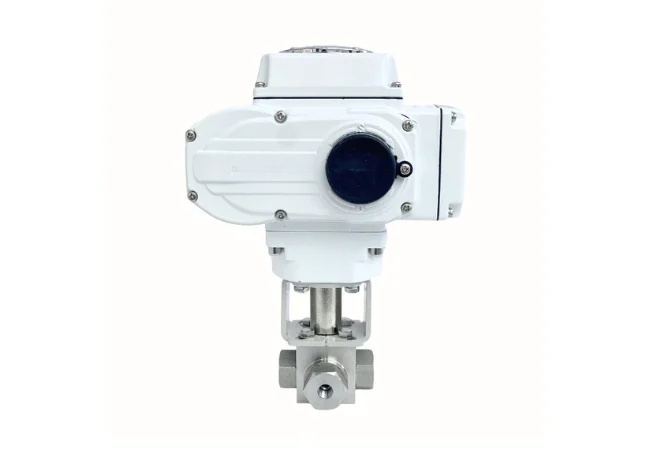
A high pressure electric actuator ball valve consists of two primary components: the ball valve body and the electric actuator mounted on top. The ball valve uses a spherical closure element with a bore through its center. When rotated 90 degrees, the valve transitions between fully open and fully closed positions, enabling quick and reliable shutoff.
The electric actuator replaces manual operation with motor-driven control, allowing the valve to be operated automatically via electrical signals. This integration enables remote control, precise positioning, and seamless communication with distributed control systems (DCS), programmable logic controllers (PLC), and other automation platforms.
When designed for high-pressure service, both the valve body and actuator must meet stringent performance standards, ensuring tight sealing, structural integrity, and long service life even under extreme operating conditions.
Material selection is a critical factor in high-pressure valve design. High-performance electric actuator ball valves are commonly manufactured from 316 stainless steel, a material well known for its exceptional mechanical strength, corrosion resistance, and durability.
Key advantages of 316 stainless steel include:
- Excellent resistance to corrosion and pitting in aggressive environments
- Superior performance under high pressure and elevated temperatures
- Compatibility with a wide range of media, including water, oil, gas, and chemicals
These properties make 316 stainless steel an ideal choice for high-pressure applications involving pressurized natural gas, hydraulic oil, high-pressure water, and chemical fluids.
To further enhance strength and reliability, critical internal and external components are often manufactured from 304 stainless steel. This reinforcement provides additional mechanical stability, especially in actuator housings, mounting brackets, and fasteners, ensuring the valve maintains precise alignment and performance over long-term operation.
High pressure electric actuator ball valves are typically available in two main configurations: switch (on-off) type and regulating (modulating) type.
Switch type valves are designed for simple open and close operations. They are ideal for safety isolation, emergency shutdown, and basic flow control tasks.
Regulating type valves provide precise position control, allowing the valve opening to be adjusted continuously to regulate flow, pressure, or temperature.
This flexibility allows the same valve platform to be adapted for a wide range of industrial control requirements.
To integrate seamlessly with modern automation systems, high pressure electric actuator ball valves support multiple signal types and control methods.
- Active contact signals
- Passive contact signals
- Resistance signals
- 4–20 mA current signals
These options make switch-type valves suitable for pressure ranges from 16 MPa to 50 MPa and compatible with various industrial control architectures.
- DC 4–20 mA input and output
- DC 0–10 V input and output
- DC 1–5 V input and output
These standardized signals enable accurate valve positioning and closed-loop control in sophisticated process systems.
Performance speed is another key advantage of electric actuator ball valves. High pressure models are capable of completing a full 90-degree rotation in as little as 20 seconds. This rapid response enhances operational efficiency, improves system safety, and allows for timely process adjustments during critical operating conditions.
Despite their compact size and lightweight construction, these actuators deliver high output torque and thrust, ensuring reliable valve operation even under maximum pressure differentials.
Modern high pressure electric actuators often feature a built-in servo amplifier, which simplifies system integration and improves control accuracy. This integrated design eliminates the need for external control modules, reducing wiring complexity and installation time.
Benefits of a built-in servo amplifier include:
Precise position feedback
Stable and responsive control performance
Enhanced reliability and reduced failure points
With support for manual control, signal-based control, and both AC and DC power supplies, these actuators provide flexible operation across diverse industrial environments.
High pressure electric actuator ball valves are frequently installed in harsh outdoor or industrial environments. To ensure reliable operation under such conditions, actuators are housed in robust NEMA 4 or NEMA 4X weatherproof enclosures.
These enclosures provide protection against:
- Dust and airborne contaminants
- Water spray and heavy rain
- Corrosive atmospheres
As a result, the valves can operate reliably in chemical plants, offshore platforms, outdoor pipelines, and other challenging locations.
Safety is paramount in high-pressure applications, particularly when handling flammable or pressurized media. Anti-static designs are incorporated into the valve structure to prevent the accumulation of static electricity, reducing the risk of sparks and ignition.
Additional safety features may include:
- Over-torque protection
- Thermal overload protection for the motor
- Position limit switches for accurate end-of-travel control
These features enhance operational safety and protect both equipment and personnel.
Thanks to their robust construction and advanced control capabilities, high pressure electric actuator ball valves are widely used across numerous industries.
In oil and gas production, processing, and transportation, valves must withstand extreme pressures and aggressive media. Electric actuator ball valves are commonly used for pipeline isolation, flow regulation, and safety shutdown systems.
High-pressure hydraulic systems require precise and reliable control of oil flow. Electric actuator ball valves provide accurate switching and modulation, supporting automated hydraulic equipment and machinery.
High-pressure water pipelines, pumping stations, and desalination systems rely on durable valve solutions. Electric actuator ball valves ensure leak-free operation and enable remote monitoring and control.
Chemical processing plants demand corrosion-resistant valves capable of handling high pressure and hazardous media. 316 stainless steel electric actuator ball valves meet these requirements while supporting advanced automation.
Compared to manual or pneumatic alternatives, high pressure electric actuator ball valves offer several significant advantages:
- Remote and automated control, reducing manual intervention
- Higher positioning accuracy, especially for modulating applications
- Lower operating costs, as no compressed air system is required
- Improved safety, with controlled and predictable operation
These benefits make electric actuator ball valves an increasingly popular choice in modern industrial systems.
High pressure electric actuator ball valves are engineered with practicality and long-term reliability in mind, making both installation and maintenance straightforward for industrial users. Their compact design and standardized mounting interfaces allow seamless integration into new systems or retrofitting into existing high-pressure pipelines without extensive modifications. Electric actuators are typically pre-mounted and factory-tested, reducing on-site installation time and minimizing the risk of alignment or wiring errors.
During installation, attention is mainly focused on proper electrical connections, correct signal configuration, and secure mounting to ensure stable operation under high pressure. Once installed, these valves require significantly less ongoing maintenance compared to manual or pneumatic alternatives, as there is no need for external air supply systems or frequent mechanical adjustments.
Routine maintenance is simple and predictable, generally consisting of periodic inspection of valve seals, actuator housing, and electrical connections to ensure continued leak-free performance. Actuator calibration and signal response should be verified at scheduled intervals to maintain accurate positioning and reliable automation. Occasional surface cleaning helps prevent dust, oil, or debris buildup, particularly in harsh industrial environments.
Thanks to corrosion-resistant stainless steel construction, sealed NEMA-rated enclosures, and robust internal components, high pressure electric actuator ball valves offer extended service life, reduced downtime, and lower total maintenance costs, making them an efficient and dependable choice for demanding industrial applications.
As industrial automation continues to evolve, high pressure electric actuator ball valves are also advancing. Emerging trends include smart diagnostics, digital communication protocols, and integration with Industrial Internet of Things (IIoT) platforms.
These innovations will further enhance predictive maintenance, operational efficiency, and system reliability, reinforcing the role of electric actuator ball valves in next-generation industrial infrastructure.
High pressure electric actuator ball valves represent a powerful combination of mechanical strength, precise control, and intelligent automation. Constructed from corrosion-resistant 316 stainless steel, capable of handling pressures up to 5000 PSI, and equipped with advanced electric actuators, these valves are ideally suited for the most demanding industrial applications.
With support for both on-off and modulating control, multiple signal interfaces, fast actuation, and robust safety features, high pressure electric actuator ball valves provide reliable performance across oil and gas, hydraulics, water treatment, and chemical industries.
As automation and electrification continue to reshape industrial operations, these valves will remain a cornerstone of safe, efficient, and future-ready flow control systems.
