
Cage-guided globe control valves have become a cornerstone in industrial fluid management, providing exceptional performance and precision in applications that demand reliability and adaptability. These valves are specifically designed to handle high-pressure drops, minimize the effects of cavitation, and significantly reduce operational noise.
The hallmark of cage-guided globe control valves lies in their modular design, interchangeable trim, and advanced engineering principles. By allowing operators to adjust flow characteristics with ease, these valves stand out as a versatile and reliable solution in various industries, including petrochemical, power generation, and manufacturing.
This article explores the intricate design, key features, operational benefits, and wide-ranging applications of cage-guided globe control valves, providing an in-depth understanding of their importance in industrial operations.
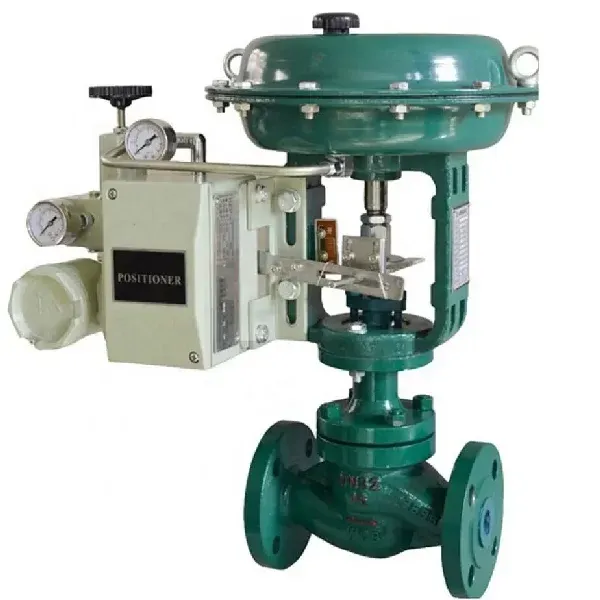
Cage-guided globe control valves are straight-stroke control valves that use a cage structure to guide the valve plug. This innovative design enables precise control of fluid flow while offering interchangeable trim to meet diverse technical requirements.
These valves are particularly effective in managing high-pressure drops, where they mitigate cavitation and noise caused by rapid pressure changes. Operators can achieve superior precision in flow control by replacing the cage to suit specific operating conditions.
The modular design allows for easy replacement of internal components to adapt to changing process requirements.
The cage structure disperses flow turbulence, reducing noise and mitigating the effects of cavitation in high-pressure environments.
A large guide diameter and sleeve guidance ensure smooth and stable operation.
These valves are designed to handle large flow rates, even under significant pressure differentials.
Can operate in extreme temperatures, ranging from cryogenic (-196°C/-320°F) to high heat (+593°C/+1099°F).
The ability to balance operational precision with durability makes cage-guided globe control valves an invaluable asset in fluid process control.
Cage-guided globe control valves bring together advanced engineering concepts from different design philosophies. They merge the precision of American designs, the efficiency of Japanese innovations, and the modularity of German engineering to create a highly reliable product.
The modular design enables easy customization, maintenance, and upgrading, making these valves suitable for a variety of industrial needs.
The valve’s S-shaped inner cavity ensures a smooth flow path with no dead zones. Internal guide wings further reduce turbulence and cavitation risks.
Floating valve seats and tapered sealing surfaces provide consistent alignment and reliable sealing under varying pressures.
The sleeve guidance system, with its large guide diameter, ensures excellent dynamic stability and operational precision. This feature is particularly critical in applications where high-pressure drops are encountered, as it minimizes turbulence and vibration.
A balanced plug design reduces actuator workload, allowing for greater control accuracy and operational efficiency.
Flow control options include equal-percentage, linear, and quick-open characteristics, providing tailored solutions for specific process demands.
Designed for long-term reliability, these valves perform exceptionally in challenging environments, including corrosive and high-temperature conditions.
Cage-guided globe valves are available in both balanced and unbalanced configurations. The choice of configuration depends on the specific application and operational requirements.

Balanced Plugs: Incorporate one or more ports that equalize pressure on both sides of the plug, reducing the forces acting on the actuator. This design is ideal for high-pressure applications.
Unbalanced Plugs: Simpler in design but may require more force to operate, making them suitable for low to moderate pressure systems.
The cage serves as the guiding mechanism for the plug, providing stability and precision. The cage also features sleeve windows that control flow characteristics, ensuring accurate and consistent performance.
Cage-guided globe control valves are compatible with a wide range of connection types, including:
Raised Face (RF)
Ring Joint (RJ)
Flat Face (FF)
Socket Weld (SW)
Butt Weld (BW)
These connection types conform to international standards such as GB/T 17213.3-2005, IEC 60534-3-1:2000, and ISA S75.03-1992, ensuring global applicability.
The versatility of cage-guided globe control valves makes them suitable for a wide range of industrial applications. They excel in processes that require precise control of fluids under challenging conditions.
Ideal for managing high-pressure and high-temperature fluids, ensuring stable operation in refining and chemical processing plants.
Used in steam and water systems to maintain precise control under extreme temperatures and pressures.
Provides reliable fluid control in production lines requiring accuracy and stability.
Performs exceptionally in low-temperature environments, such as in the liquefied natural gas (LNG) industry.
Metal Seats: Suitable for temperatures ranging from -196°C to +593°C, offering high durability in extreme conditions.
Soft Seats: Operate efficiently in moderate temperatures, ranging from -45°C to +200°C, providing reliable sealing in less demanding environments.
One of the standout features of cage-guided globe control valves is their ability to reduce noise and cavitation. The internal guide wings within the valve body minimize the force exerted by the medium, thereby reducing turbulence and preventing cavitation.
Cavitation, a phenomenon caused by rapid pressure changes, can damage valve components and compromise performance. By dispersing flow turbulence through the cage design, these valves ensure quieter and more efficient operation.
Cage-guided globe control valves are available in various sizes, configurations, and materials to suit specific operational needs.
Size Range: Typically available in sizes ranging from 1 inch to 12 inches.
Actuation: Compatible with standard diaphragm actuators for precise control.
Material Options: Available in a wide range of materials, including stainless steel, carbon steel, and alloy materials, to meet diverse environmental and process requirements.
The demand for advanced fluid control systems is driving innovation in cage-guided globe control valves. Key trends include:
Smart Valve Technology: Integration of sensors and IoT-enabled actuators for real-time monitoring and control.
Eco-Friendly Materials: Development of valves using sustainable materials to reduce environmental impact.
Enhanced Customization: Increased focus on modular designs that allow greater adaptability for specific applications.
Cage-guided globe control valves embody the perfect balance of precision, reliability, and adaptability. Their modular design, advanced features, and robust construction make them indispensable in managing complex industrial processes.
From reducing noise and cavitation to providing accurate flow control under extreme conditions, these valves excel across a wide range of applications. As industries continue to demand more efficient and innovative solutions, cage-guided globe control valves are poised to play a critical role in shaping the future of industrial fluid management.
By combining cutting-edge engineering with practical versatility, these valves ensure optimized performance, reduced downtime, and increased efficiency for industrial operations worldwide.
