
High pressure electric ball valves have become essential components across today’s most demanding industrial environments. As industries push toward higher automation, stricter safety standards, and smarter plant operations, these valves deliver capabilities that traditional manually operated valves cannot match. Their precise electric actuation, rugged construction, and seamless integration with digital control systems make them a cornerstone of advanced fluid handling technologies.
From petrochemical processing and natural gas transmission to power generation, water treatment plants, and high-pressure manufacturing systems, high pressure electric ball valves provide accurate flow control, enhanced safety, and long-term reliability—all while operating efficiently under extreme pressure conditions. As industrial facilities continue to modernize, these valves serve as crucial elements in supporting sustainable, efficient, and highly automated workflows.
This article explores in depth the design, advantages, applications, and technological advancements driving the global adoption of high pressure electric ball valves.
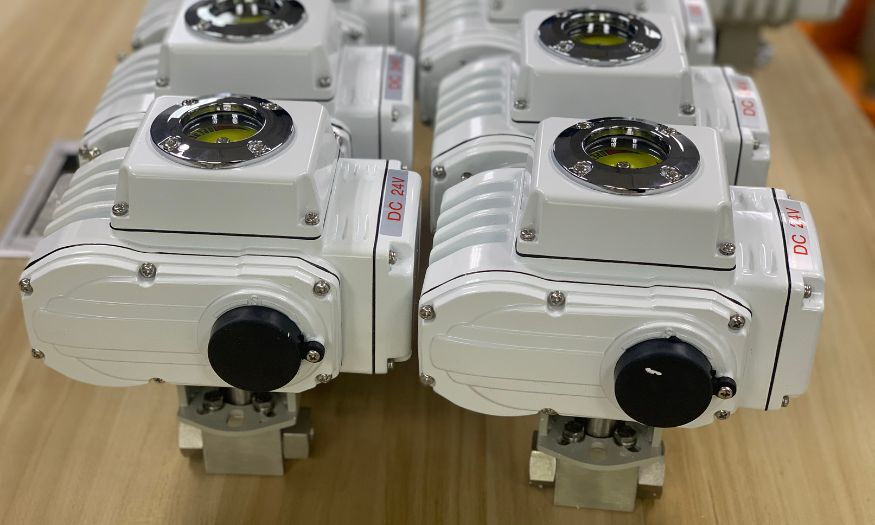
High pressure electric ball valves are quarter-turn valves engineered specifically for fluid control in high-pressure systems—often ranging from several hundred to several thousand PSI. Their central operating element is a precision-machined spherical ball with a flow bore. When the electric actuator rotates the ball 90 degrees, the valve switches between its fully open and fully closed positions.
The electric actuator replaces manual effort with automated, accurate torque-driven control. This automation ensures that the valve can be opened, modulated, or closed with consistent speed and precision, even under intense mechanical resistance caused by high-pressure media.
Compared to standard industrial ball valves, high pressure variants include several advanced design features:
Thicker and reinforced valve bodies to withstand large pressure differentials.
High-strength metals, such as stainless steel, duplex steel, or high-grade carbon steel.
Robust stem assemblies and blowout-proof designs to maintain structural integrity.
Reinforced seats and seals, often made from PTFE, PCTFE, PEEK, or metal-to-metal sealing structures.
High-torque electric actuators capable of reliable operation in high-pressure scenarios.
Fire-safe and anti-static designs for hazardous locations.
These engineering improvements ensure the valve maintains exceptional sealing, structural stability, and consistent functionality throughout long service cycles in harsh environments.
One of the most significant advantages of high pressure electric ball valves is their ability to deliver precise flow regulation—something increasingly important in modern industrial processing.
In many systems, high pressure inherently introduces challenges: manual valves become harder to operate accurately, flow fluctuations increase the risk of inefficiencies, and even slight deviations can affect product quality or process stability.
Electric actuation eliminates these issues by providing:
Exact valve positioning in both on/off and modulating modes
Highly repeatable control, essential for maintaining consistent flow
Integration with sensors and monitoring systems for real-time adjustments
Smooth actuation cycles, reducing the risk of pressure surges
Chemical and petrochemical plants: Reaction rates often depend on precise flow ratios of chemicals or gases. Even minor inconsistencies can affect product purity and yield.
Power generation: Steam distribution, cooling water systems, and high-pressure feedwater circuits require tight control to maintain thermal balance and energy efficiency.
Water treatment: High-pressure reverse osmosis and advanced filtration processes depend on stable, adjustable flow.
By maintaining tight control in these systems, high pressure electric ball valves significantly reduce waste, improve product consistency, and streamline overall operational performance.
Today’s industrial infrastructure increasingly relies on digital systems for centralized monitoring and automated control. High pressure electric ball valves integrate flawlessly into this environment, connecting with PLC, DCS, and SCADA systems for fully automated operations.
Remote operation from control rooms or mobile devices
Reduced need for manual inspection and physical access, which is especially valuable in hazardous or hard-to-access environments
Synchronized valve actuation, essential in systems requiring coordinated multi-valve sequences
Programmable control logic, enabling valves to respond to real-time system data
Automatic reporting and event logging, crucial for audits and maintenance planning
In large industrial operations, the ability to control and track hundreds of valves across a plant facility significantly enhances operational efficiency and reduces human error.
Modern electric actuators are equipped with intelligent modules that provide:
Real-time valve position feedback
Torque monitoring
Cycle count logging
Predictive maintenance alerts
Fault detection
These capabilities enable proactive maintenance, prevent system failures, and support Industry 4.0 initiatives aimed at improving reliability and lowering operational costs.
Safety is a non-negotiable priority in high pressure systems. Electric ball valves provide several inherent advantages that make them preferred choices for risk-sensitive applications.
Electric actuators can be programmed to react instantly to abnormal system conditions. If sensors detect:
Excessive pressure
Rapid flow drops
Leakage
Equipment malfunction
Hazardous environmental conditions
…the system can trigger the valve to close within seconds. This immediate shutoff capability protects equipment, personnel, and the environment.
Many high pressure electric ball valves incorporate:
Spring-return actuators, returning the valve to a safe position on power loss
Fail-close or fail-open logic, depending on the application
Battery backup modules for uninterrupted safety control
These features ensure that the system reverts to a safe operating state even during electrical outages or control system failures.
High-pressure leaks can be catastrophic, so these valves are engineered for enhanced sealing performance:
Advanced seat designs providing bubble-tight closure
Fire-safe certified construction
Anti-blowout stems and reinforced packing
The result is a system with minimized risk of emissions, leaks, or accidental releases.
High pressure electric ball valves undergo demanding mechanical, thermal, and chemical conditions. To ensure longevity, they are built from the most robust materials and designed to resist wear even during continuous operation.
Stainless Steel 304/316: High corrosion resistance for chemical and food industries
Carbon Steel / Alloy Steel: Excellent strength for high-pressure oil and gas applications
Duplex & Super Duplex Steel: Exceptional corrosion resistance for seawater and offshore environments
High-Nickel Alloys: For highly corrosive or high-temperature media
These materials ensure the valve can withstand years of operation without distortion, cracking, or deterioration.
High pressure valves often include:
PTFE or PEEK seats for chemical resistance
Metal-to-metal seats for extreme pressure and temperature
Low-friction coatings to reduce wear on the ball and seats
Consistent performance over thousands of cycles significantly reduces maintenance frequency and downtime.
One of the reasons high pressure electric ball valves are widely adopted is their versatility. They can handle water, steam, air, gas, oil, corrosive chemicals, slurries, and various industrial fluids.
Oil & Gas Pipelines
Chemical and Petrochemical Plants
Power Generation Facilities
Water and Wastewater Treatment
Pharmaceutical Manufacturing
Marine and Offshore Operations
Food and Beverage Processing
Industrial Manufacturing Systems
Their ability to accommodate bi-directional flow, provide a full-port or reduced-port design, and integrate with automated systems makes them suitable for both general-purpose and highly specialized applications.
Unlike pneumatic or hydraulic actuators, electric actuators generally consume power only when the valve is changing positions. This reduces overall energy consumption over the long term.
Additional cost benefits include:
Lower maintenance costs thanks to fewer mechanical components
No need for external air compressors, unlike pneumatic systems
Predictive maintenance capabilities, reducing unplanned shutdowns
Extended service life due to advanced materials and engineering
These advantages contribute to long-term operational savings for industrial facilities.
High pressure electric ball valves are designed for practicality during installation and everyday use. Their self-contained actuators require minimal setup, and the valves can be installed using standard flanged, threaded, or welded connections.
Maintenance is also simplified through features such as:
Easy access actuator housings
Quick-disconnect electrical connectors
Modular parts that allow rapid servicing
Diagnostic tools built into the actuator
Together, these reduce downtime and support continuous plant operations.
The evolution of high pressure electric ball valves is closely tied to advancements in automation, smart manufacturing, and predictive maintenance technologies.
Emerging trends include:
IoT-enabled actuators with cloud connectivity
AI-driven predictive valve diagnostics
High-efficiency brushless DC motors
Enhanced cybersecurity features for industrial networks
Environmentally friendly materials and designs
As digital transformation accelerates across global industries, the demand for intelligent, safe, and efficient high pressure electric ball valves will continue to grow.
High pressure electric ball valves are indispensable assets in modern industrial systems, offering a powerful combination of precision control, advanced automation, robust durability, and superior safety features. Their ability to operate reliably under extreme pressure and temperature conditions makes them ideal for the world’s most demanding applications.
As industries continue to adopt smarter, more efficient technologies, the role of high pressure electric ball valves will become increasingly vital. With ongoing advancements in materials, actuator technology, and digital connectivity, these valves will remain at the forefront of industrial innovation for years to come.
